One Arsenal fan has taken fanatical support to new heights by getting
married in a full Arsenal kit and luckily for him, his wife approved.
"My wife is from Woking and she is awesome," he wrote on Facebook. "She
let me get married in my full Arsenal kit! Maybe I just got lucky."
In another post, the unidentified man wrote: "It's like I won the FA Cup and found the best woman in the world ever."
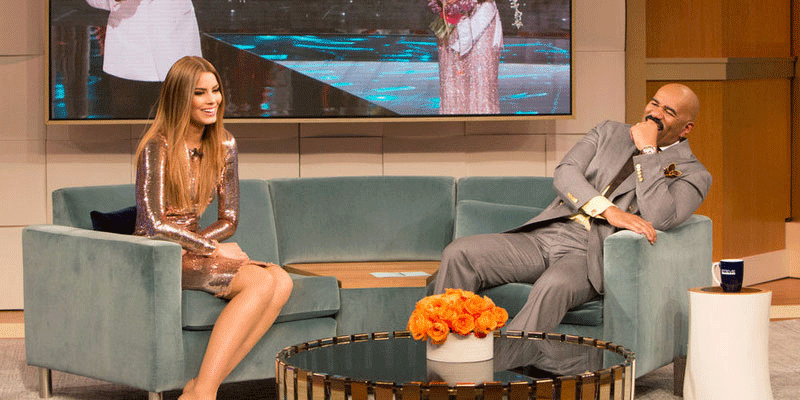
During a two-day special on his talk show, Steve Harvey came face-to-face with Miss Universe Pia Alonzo Wurtzbach and runner-up Miss Colombia Ariadna Gutiérrez to clear the air with both contestants and clarify what really happened the night of the pageant.
When sitting down with Gutiérrez, 22, for Part II of the Miss Universe: The Truth special, airing Tuesday, Harvey, 58, asks for her honest feedback on his hosting skills.
"You have to learn how to read cards, because it was on the card!" she said, adding, "You wanted me to win."
Harvey goes along with her theory, joking, "Yeah, that's it! I
wanted you to win. I'm off the hook now, that's it. I can leave it at
that."
In Part I of the special, which aired Monday, Harvey denied
that his gaffe was a publicity stunt, and revealed that his family
received death threats after he mistakenly announced Miss Colombia
instead of Miss Philippines as the winner of the crown.
"Like I'm going to do that to myself," Harvey said. "My family
got death threats, I have people camped outside my house," he said,
later adding, "My kids can't go anywhere."
The comedian expressed his remorse for his mistake, and said it greatly affected him.
"I've had many sleepless nights," he said. "My deeper concern was for the two women."
As for allegations that he missed rehearsals or was intoxicated while hosting, Harvey vehemently denied both.
"I was at every single rehearsal," he said.
Wurtzbach, 26, confirmed that Harvey didn't miss rehearsals, and says she has moved on from the incident.
"I don't know where the rumor came from, but I can tell you that
he was there for everything," she said on the show. "Steve, don't beat
yourself up anymore, let's move forward."
‘The Revenant’ led nominations with nods in
12 categories, including Best Actor for Leonardo DiCaprio (Photo credit:
20th Century Fox)
On a calm,cool morning like any other in Los Angeles, the fortunesof some young stars are on the brink of a seismic shift. The Academy of Motion PicturesArtsand
Sciences today announced the nominations for the 88th annual Academy
Awards, and it included a roster of first-time nominees such as Brie
Larson, Rachel McAdams and Alicia Vikander. The kudos–and occasionally, future cash–associated with an Oscar makesit the most coveted award of a busy season and one that could change the careers of those picked.
This year, critical favorites such as Brooklynand Spotlightsaw nods in the Best Picture category as didBoxOffice hitThe Martian. Leonardo DiCaprio
came one step closer to the Best Actor Oscar that has so far evaded
him, landing a nomination in the category. Sentimental crowd favorite
Sylvester Stallone, fresh off his Golden Globe win, snagged a
nomination for Best Supporting Actor in Creed. Jennifer Lawrence earned her fourth nominations for Joy; Kate Winslet earned her seventh, this year for her Supporting Actress role inSteve Jobs.
Recommended by Forbes
Alejandro González Iñárritu’s frontier saga The Revenant led the nominations, with 12 nods. Mad Max: Fury Road had the next best haul, scoring 10 nominations including Best Picture and Best Director. Among the biggest surprises: Carol
did not earn a nod for Best Picture or Best Director, though Cate
Blanchett and Rooney Mara were both acknowledged for their
performances. Straight Outta Compton, which some hoped
would have been acknowledged in the Best Picture category, only earned
one nomination, for Best Original Screenplay.
Perhaps most disappointing is that zero non-white actors earned
nominations this year. Last year’s lack of diversity prompted the
hasthag #OscarsSoWhite to start trending in protest and sadly, this year is no exception. Potential candidates, including Will Smith in Concussion or Idris Elba in Beasts of No Nation, were left out, as was long shot hopeful Tangerine. Not a single woman was recognized in the Best Director category.
The Oscars will be awarded on Feb. 28 at the Dolby Theatre in
Hollywood, airing at 7 p.m. ET on ABC. Here’s the full list of nominees:
BEST PICTURE The Big Short Bridge of Spies Brooklyn Mad Max: Fury Road The Martian The Revenant Room Spotlight
ACTOR IN A LEADING ROLE Bryan Cranston,Trumbo
Matt Damon, The Martian Leonardo DiCaprio,The Revenant
Michael Fassbender,Steve Jobs
Eddie Redmayne,The Danish Girl
ACTOR IN A SUPPORTING ROLE
Christian Bale,The Big Short
Tom Hardy, The Revenant
Mark Ruffalo, Spotlight
Mark Rylance,Bridge of Spies
Sylvester Stallone,Creed
ACTRESS IN A LEADING ROLE
Cate Blanchett,Carol
Brie Larson,Room Jennifer Lawrence,Joy
Charlotte Rampling,45 Years
Saoirse Ronan,Brooklyn
ACTRESS IN A SUPPORTING ROLE
Jennifer Jason Leigh, The Hateful Eight
Rooney Mara,Carol
Rachel McAdams,Spotlight
Alicia Vikander,The Danish Girl
Kate Winslet,Steve Jobs
ANIMATED FEATURE FILM Animalisa Boy and the World Inside Out Shaun The Sheep Movie When Marnie Was There
CINEMATOGRAPHY Carol The Hateful Eight Mad Max: Fury Road The Revenant Sicario
COSTUME DESIGN Carol Cinderella
The Danish Girl
Recommended by Forbes
Mad Max: Fury Road The Revenant DIRECTING
Adam McKay,The Big Short
George Miller, Mad Max: Fury Road
Alejandro González Iñárritu,The Revenant
Lenny Abramson, Room
Tom McCarthy,Spotlight
DOCUMENTARY FEATURE Amy Cartel Land
The Look Of Silence
What Happened, Miss Simone?
Winter on Fire: Ukraine’s Fight For Freedom
DOCUMENTARY SHORT Body Team 12 Chau, beyond the Lines Claude Lanzmann: Spectres of the Shoah A Girl in the River: The Price of Forgiveness Last Day of Freedom
FILM EDITING The Big Short Chau, beyond the Lines Mad Max: Fury Road The Revenant Spotlight Star Wars: The Force Awakens
FOREIGN LANGUAGE FILM
Colombia, Embrace of the Serpent
France, Mustang
Hungary, Son of Saul
Jordan, Theeb
Denmark, A War
MAKEUP AND HAIRSTYLING The 100-Year-Old Man Who Climbed out the Window and Disappeared The Revenant Mad Max: Fury Road
MUSIC (ORIGINAL SCORE)
Thomas Newman, Bridge of Spies
Carter Burwell, Carol
Ennio Morricone, The Hateful Eight
Johann Johannsson, Sicario
John Williams, Star Wars: The Force Awakens
ORIGINAL SONG
“Earned It,” Fifty Shades of Grey
“Manta Ray,” Racing Extinction
“Simple Song No. 3,” Youth
“Till it Happens to You,” The Hunting Ground
“Writing’s on the Wall,” Spectre
PRODUCTION DESIGN Bridge of Spies The Danish Girl
Mad Max: Fury Road
The Martian The Revenant
SHORT FILM (ANIMATED) Bear Story Prologue Sanjay’s Super Team We Can’t Live Without Cosmos World of Tomorrow
SHORT FILM (LIVE ACTION) Ave Maria Day One Everything Will Be Okay (Alles Wird Gut) Shok Stutterer
SOUND EDITING Mad Max: Fury Road The Martian
The Revenant
Sicario Star Wars: The Force Awakens
SOUND MIXING Bridge of Spies Mad Max: Fury Road
The Martian
The Revenant
Star Wars: The Force Awakens
VISUAL EFFECTS Ex Machina Mad Max: Fury Road
The Martian
The Revenant Star Wars: The Force Awakens
WRITING (ADAPTED SCREENPLAY)
Charles Randolph and Adam McKay, The Big Short
Nick Hornby, Brooklyn
Phyllis Nagy, Carol
Drew Goddard, The Martian
Emma Donoghue, Room
WRITING (ORIGINAL SCREENPLAY)
Matt Charman, Ethan Coen and Joel Coen, Bridge of Spies
Alex Garland, Ex Machina
Pete Doctor, Meg LeFauce, and Josh Cooley, Inside Out
Josh Singer and Tom McCarthy, Spotlight
Jonathan Herman, Andrea Berloff, Straight Outta Compton
Nobel
Laureate Prof. Wole Soyinka has led many practitioners in the creative
industry in a protest march to save Palestinian writer and artist,
Ashraf Fayadh (35), from being hanged by the Saudi authorities.
Fayadh is facing a death sentence for posting online a video showing
women being flogged by Saudi Arabia authority ostensibly for some
religious infractions.
He also renounced his Islamic faith.
In Lagos, the ‘Free Ashraf Fayadh Now’ campaign had the Nobel
laureate leading the charge for the freedom of the Palestinian artist
residing in Saudi Arabia who faces certain death if the world sat back
and merely watched.
Soyinka said the need to hold global reading for Fayadh was necessary because “this poet is one of us.”
He condemned any form of religious practice that sentences people to death for their opinion.
Soyinka wondered: “Why should we not be partisan on this? Religion is
a personal affirmation. We should not subscribe to any article of faith
that says ours is superior to the other. We do not deserve to be
sentenced to death, harassed or imprisoned for practising a different
faith”.
To Soyinka, perhaps the world holds too much respect for the
dogmatism of others which has continued to fuel the impunity perpetuated
in the name of religion all over the world. He said religion should
simply be a matter of followership or otherwise with no one being
compelled one way or the other.
Soyinka who said humanism was his religion, added that it was time to uphold humanism as the global ideal.
He blamed its promoters for being too tepid and not insisting on certain tenets of humanism that should be upheld.
“Too bad we have not structured what we call humanism which is
perhaps the problem we are having, which makes a minority to impose
their will on the rest of us. We ought to confront the absence of
humanism. We allowed the sacred texts to overwhelm our lives. Why should
a bunch of mortals sit down and pass death on others. What kind of
arrogance is that?”
The literary giant and human rights activist also condemned what he
described as the slavery and second class status of women who are
confined to wearing hijab in the name of religion and called for its
abrogation.
He
said ECOWAS Heads of government argument about the hijab is a wrong,
advising that instead, the argument should be for humanism that would
not enslave women the way the hijab does.
What we should ask is: what is human dignity? Why is that a minority
imposes its own on the rest of the world? Women should be left alone to
wear what they want and not be imposed upon. It’s slavery; it’s
subjecting women to humiliation. We need to know what the Prophet said
about it or is it an imposition? Islam has to talk to Islam to prevent
interlopers like myself from talking about it. But we don’t want the
explanation to be at the expense of human life and dignity.
“We are not doing Ashraf Fayadh a favour by this protest. We are
doing ourselves a favour. We are saying religion is a personal thing”.
Executive Director, TheNews, Mr. Kunle Ajibade, read from his prison
memoir, Jailed for Life, written during the Gen. Sanni Abacha years of
dictatorship, bringing the terrible conditions of condemned persons
close home to the audience made up of writers and other members of the
creative community.
A fresh crisis is brewing in the Peoples
Democratic Party as some national officers of the party have called on
the party’s Acting Chairman of the Board of Trustees, Alhaji Haliru
Bello, and others to step down with immediate effect.
They also said the party’s National Publicity Secretary, Chief Olisa Metuh, should also vacate office as well.
They made the call in a statement in Abuja on Monday.
The officers, who said they were acting
on behalf of members of the party’s National Executive Committee, hinged
their position on the corruption charges, which the two men currently
face in their prosecution by the Economic and Financial Crimes
Commission.
While Bello has been released on bail,
Metuh is currently being remanded at Kuje Prisons on the order of the
court while his bail application is to be decided on Tuesday (tomorrow).
The statement, requesting the officers
to step down, was signed by the Deputy National Youth Leader, Dennis
Alonge-Niyi; Deputy National Legal Adviser, Bashir Maidugu; Deputy
National Organising Secretary, Okey Nnaedozie; and Deputy National
Publicity Secretary, Alhaji Abdullahi Jalo.
These officers also called on the
party’s Acting National Chairman, Prince Uche Secondus, to revert to his
position as the deputy national chairman and allow the party’s caucus
from the North-East to produce the substantive chairman as ordered by an
Abuja High Court.
The statement argued that the sacking of
the men, who are on trial for alleged fraud, was the only way to move
the party forward, saying the actions and “omissions of a very few
individuals, who parade themselves as leaders” were negatively impacting
on the PDP.
The national officers and NEC members
also called on Bello and Metuh to separate the party from their
corruption cases, arguing that the duo didn’t carry the party along when
they took money from the former National Security Adviser, Col. Sambo
Dasuki (retd.).
Bello is on trial for allegedly using
his personal company to collect N300m from Dasuki while Metuh allegedly
collected N400m from the same man.
Metuh had confessed that he collected
the money, but said the amount was a payment for a job he did for former
President Goodluck Jonathan, which he did not disclose.
The national officers of the party said
this was one of the reasons the PDP spokesman should be allowed to carry
his cross alone.
The statement reads, “In the light of
this, the Deputy National Officers of the PDP along with other members
of the National Executive Committee, having carefully deliberated upon
and reviewed the current situation of our party, wish to state and
demand as follows:
“We hereby strongly dissociate the PDP
from the ongoing trials of Mohammed (Bello) and Metuh on various charges
by the anti-graft agencies.
“This is because the charges against them are in their individual capacities and not acting on behalf of the party.
“They are said to have received funds
using accounts of their private companies without the knowledge and
instructions of any organs of the party.
“All those mentioned in the ongoing
corruption trial are therefore on their own and the party was not
involved financially or in any way with the office of the National
Security Adviser or any other organ of the Federal Government in the
last regime.”
The party officers submitted that the
affected officers must bear full responsibility for their actions and
must “henceforth refrain from dragging the name of the party through the
mud.”
They said as a consequence of the wide
public interest which the trials had generated, the National Caucus, the
BoT and the PDP Governors Forum must prevail on the two fraud suspects
to honourably step aside until they cleared their names and saved the
party from further damage.
While registering the PDP’s full support
for the anti corruption war of the Federal Government, the party
appealed to the President to apply the principles of objectivity in
order not to create the impression that the government was on a
witch-hunt.
The officers urged the NEC of the party
to convene a meeting immediately in order to formalise the appointment
of a new spokesperson in line with the party’s constitution, saying the
new spokesperson should not be one that would be weighed down by
integrity issues.
On Secondus, they said it was the common
interest of democracy that the Abuja High court ruling of December 15,
2015 on the national chairmanship of the party must therefore be
respected and implemented.
The judgment, which they said was
declaratory, and on which no order of stay of execution from any other
court had been granted, orders Secondus to vacate office within 14 days.
The officials contended that the party
must appoint a substantive chairman from the North-East, where the
position was zoned following the resignation of its erstwhile National
Chairman, Adamu Mu’azu.
They added, “The NEC must do the needful
by selecting a suitable national chairman from the North-East to
complete the tenure in accordance with our tradition and the party’s
constitution.
‘‘The pursuit of national chairman of
the party of any appeal against this ruling, which sought to interpret
our constitution, was not only selfish but inconsiderate in view of the
sanctity of our zoning arrangements.’’
The officers said there was the need for
the accounts of the party to be properly audited by certified external
auditors as enshrined in the party’s consitution.
Secondus, in his reaction, however, said
he had appealed the judgment that sacked him from office, adding that
those calling for his removal ‘‘are ignorant of the law.’’
Meanwhile, the national leadership of the PDP has asked members of the party to beware of fifth columnists in the party.
The National Secretary of the party, Prof. Wale Oladipo, stated this in a statement in Abuja on Monday.
He was reacting to the call by some national officers of the party that some members of the NWC should be removed from office.
He said, “In the same vein, we have
noted the desperation of some opportunistic and selfish individuals,
including those being used by the APC, to draw political capital from
the present challenges facing our party.
“However, whereas the PDP remains a
platform for all Nigerians to aspire, we note that our constitution is
clear on the mode of election, tenure, succession in the case of vacancy
and removal from office of our officers at all levels. Also the
constitution and laws of our country provide that an individual remains
innocent until otherwise proven by a court of competent jurisdiction.
“While we await the judicial
determination of the cases involving some of our leaders at the EFCC, it
is important that all party members show commitment to our rebuilding
effort by ensuring utterances that encourage and unite rather than
further discourage and divide our members.’’
Claudio Ranieri has confirmed he has stripped Riyad Mahrez of penalty duties following his miss against Aston Villa.
The
Algeria international has been in sparkling form this season but has
twice missed from the spot to cause his side to drop Premier League
points.
Mahrez’s effort was saved by Mark Bunn in the 1-1 draw
with Villa and he also failed to convert against AFC Bournemouth in a
0-0 draw.
“He
was a little sad. I said to him: ‘Come on man, even champions miss
penalties, just concentrate on keeping your form going’,” Ranieri said.
“I said: ‘You have to stay calm. Don’t worry, I’m happy with you. It doesn’t matter’.
“It
was a good chat with him. I spoke to him and said I’m going to change
things for now to take the pressure off and when I think the time is
right I’d give it back to him.
“I
don’t know who is going to take them. I will speak to the players. Leo
Ulloa took some last season but it could be Jamie Vardy, I will speak to
him.”
Leicester host Tottenham in the FA Cup third-round replay at the King Power Stadium on Thursday.
Morgan Schneiderlin admits Manchester United players were involved in a half-time shouting match during the win over Liverpool.
Louis
van Gaal’s side struggled to gain a foothold during the first half at
Anfield but ultimately snatched a winner 12 minutes from time through
captain Wayne Rooney.
Liverpool defender Mamadou Sakho claimed to
French television after the match that United players were rattled at
the break and Schneiderlin admits there were some heated exchanges prior
to an improved second-half display.
“In the first half, we didn’t win enough second balls. Sometimes we won the first ball but not the second ball,” he said.
“When
we came into the dressing room after the first half, there was some
screaming and shouting but of course that is normal because in a derby
you cannot lose the battle.
“Liverpool are a very high-pressing team and we knew if we kept a clean sheet we would have a chance to win the game.
“In
the second half we did what we had to do. We scored one goal, stayed
strong and, at the end, it is three points which is amazing.”
Rooney’s
fourth goal in three Premier League matches proved the difference and
Schneiderlin hopes he continues his strong form in 2016 so far in order
to keep United in the trophy hunt.
“Wayne
is still the main figure at the club, he’s the one guy who has scored
so many goals in his career and he will keep doing it. Sometimes you
have spells where you don’t score but he has kept the smile on his face
and trained hard, he said.
“You saw his two goals against
Newcastle were very good and today he scored another amazing goal. We
need him in the second half of the season if we are to achieve something
special.”
Former Manchester United captain Nemanja Vidic is a free agent after formally rescinding his contract with Inter Milan.
The
34-year-old Serbian left Old Trafford to join the Nerazzurri in July
2014 and made 28 competitive appearances for the San Siro side, scoring
one goal.
Hernia and back injuries meant the centre-back failed to
feature for Inter this season and he is now on the lookout for a new
club.
Vidic
told Inter’s official website: “Thanks to all the Nerazzurro family and
to the Inter fans. I wish the club all the best for the future. Forza
Inter!”
The one-time Red Star Belgrade defender won the Champions League and five Barclays Premier League titles with United.
The
police in plateau state has paraded one Mrs. Salomi Samuel who was
alleged to have thrown her new born baby from a storey building.
The suspect, Salome Samuel, who confessed to have committed the
offence revealed that she was impregnated by one Francis Salu who was a
soldier attached to troops of Operation Save Heaven in Makera Base in
Riyom LGA but that the said soldier had since been transferred to
another place unknown to her before she gave birth.
The woman, who soon after delivering of the baby, said she threw the
baby because she had no further option than to kill the baby since his
father was nowhere to be found.
According to CP Adekunle Oladunjoye, while briefing journlists at the
police Headquarters in Jos said the new born baby was threw through a
window of a storey building and died instantly.
Supermodel Stephanie Seymour was
arrested Friday night for allegedly driving while under the influence, a
Connecticut State Police spokesman confirms to PEOPLE.
Seymour, 47, was driving in Greenwich, Connecticut, Friday evening and was allegedly involved in an accident.
A police spokesman tells PEOPLE that the model stopped her Land
Rover at the end of an off-ramp from Interstate 95 and then put the
vehicle in reverse, colliding with a Mercedes Benz. An arrest report
obtained by PEOPLE claims Seymour's vehicle was on its side when they
arrived at the scene.
The arrest report claims there was a "strong odor of an alcoholic beverage [e]mitting from" Seymour's mouth as she spoke.
"After six or seven requests for her license, registration and
insurance, she finally was amble to fumble through her purse as she
handed over her Connecticut driver's license along with a credit card,"
the report reads.
Seymour allegedly refused to complete field sobriety tests,
according to police, and was arrested for operating under the influence
and unsafe backing.
She was released on $500 bail and will be in court in early February to answer to the charges.
Controversial
Nollywood actor and acting president of the Actors’ Guild of Nigeria
(AGN), Emeka Ike, has allegedly beaten up his secretary in church.
It could be recalled that Emeka Ike took over the reins of the AGN
after a court order terminated the appointment of its former president,
Ibinabo Fiberesima in 2015.
The
AGN national secretary, Samuel Onibiyo, who is reported to have
sustained injuries after the fight with Emeka Ike, has also been fired
from his position by the president.
According to reports, the executive members of the guild attended a
church service in Onitsha where a quarrel ensued between Ike
and Onibiyo over negligence and constitutional breaches on the part of
the president.
An
angry Emeka Ike then reportedly joined forces with the chairman of the
Anambra chapter of AGN, Browny, to beat up the national secretary.
Emeka Ike has however denied the reports saying the stories are unfounded and cooked up to smear his image.
Image caption
Daniel and Celine Dion were two of 14 siblings, who performed together
The older brother of Canadian singer Celine Dion has died of cancer, two days after her husband also died.
Daniel Dion, 59, died on Saturday near Montreal, a statement by the singer's spokeswoman said.
Ms Dion's family paid tribute to the father-of-two, calling him "a gentle and reserved man of many talents".
Her
husband and former manager, Rene Angelil, died on Thursday aged 73. His
death in Las Vegas came after two bouts with throat cancer.
Daniel Dion was the eighth of 14 children, and performed with his siblings in their parents' piano bar in Quebec province.
He had been suffering cancer of the throat, tongue and brain, his sister Claudette told the Journal de Montreal newspaper (in French).
"He was ready, and isn't suffering any more," she said. "He was at peace."
Celine Dion recorded an album under Mr Angelil's management aged just 12
The funeral of Mr Angelil, who helped to launch
Celine Dion's career, will be held on Friday in the Notre Dame basilica
in Montreal, where the couple married.
Dion recorded 25 studio albums and is the fifth-best-paid recording artist in the world, with a value of some $630m (£437m).
In 1999, her song My Heart Will Go On, from the soundtrack of the film Titanic, won two Grammy awards.
You need to install Flash Player to play this content.
Media captionTsai Ing-wen said people in Taiwan wanted a transparent government
Tsai Ing-wen has been elected Taiwan's first female president.
Ms Tsai, 59, leads the Democratic Progressive Party (DPP) that wants independence from China.
In
her victory speech, she vowed to preserve the status quo in relations
with China, adding Beijing must respect Taiwan's democracy and both
sides must ensure there are no provocations.
China sees the island as a breakaway province - which it has threatened to take back by force if necessary.
In her speech, Ms Tsai hailed a "new era" in Taiwan and pledged to co-operate with other political parties on major issues.
The will of the Taiwanese people would be the basis for relations with China, Ms Tsai said.
"I
also want to emphasise that both sides of the Taiwanese Strait have a
responsibility to find mutually acceptable means of interaction that are
based on dignity and reciprocity.
"We must ensure that no
provocations or accidents take place," Ms Tsai said, warning that "any
forms of suppression will harm the stability of cross-strait relations".
She thanked the US and Japan for their support and vowed Taiwan would contribute to peace and stability in the region.
Ms Tsai had a commanding lead in the vote count when Eric Chu of the ruling Kuomintang (KMT) admitted defeat.
Mr Chu congratulated Tsai Ing-wen and announced he was quitting as KMT head. Taiwan's Premier Mao Chi-kuo also resigned.
The election came just months after a historic meeting between the leaders of Taiwan and China.
However,
the flagging economy as well as Taiwan's relationship with China both
played a role in the voters' choice, correspondents say.
The KMT
has been in power for most of the past 70 years and has overseen
improved relations with Beijing - Ms Tsai's is only the second-ever
victory for the DPP.
The first was by pro-independence advocate
Chen Shui-bian; during his time as president between 2000 and 2008
tensions with China escalated. Analysis: Cindy Sui, BBC News, Taipei
The victory by Tsai Ing-wen marks a defeat for not only the pro-unification ruling party KMT but also China.
Despite
the past eight years of reduced tensions and much improved relations
built by the KMT and China, Taiwanese voters have voted for Ms Tsai from
the pro-independence party instead. Basically, they've voted to keep
Beijing at a distance.
This reflects not only widespread
dissatisfaction with President Ma Ying-jeou of the KMT over insufficient
measures to improve the lacklustre economy, low wages and widening
wealth gap - it also reflects growing worries by Taiwanese people that
the island may become too economically dependent on China and that this
will make it hard for Taiwan to fend off pressures by Beijing to reunify
with it one day.
The message voters have sent Beijing is that,
while they want reduced tensions and good relations, they cherish
Taiwan's sovereignty, democracy and self-rule even more.
The
challenge now is for Ms Tsai to find a way to work with China, the
island's biggest export market, trade partner and security threat.
Ms Tsai, a former scholar, has said she wants to "maintain [the] status quo" with China.
She became chairwoman of the DPP in 2008, after it saw a string of corruption scandals.
She
lost a presidential bid in 2012 but has subsequently led the party to
regional election victories. She has won increased support from the
public partly because of widespread dissatisfaction over the KMT and
President Ma Ying-jeou's handling of the economy and widening wealth
gap. Saturday's polls come after a historic meeting
between President Ma and Chinese President Xi Jinping in Singapore in
November for talks that were seen as largely symbolic - the first in
more than 60 years.
Eric Chu, 54, is the mayor of New Taipei City and stepped up to become chairman of the party in October.
The KMT has lost its majority in the legislature for the first time in history.
The
former accounting professor was seen as popular with young people in
the party, but had been unable to change public opinion that is
increasingly unhappy with the party's friendly stance towards China and
the island's economic travails.
In 2014, hundreds of students
occupied the parliament in the largest show of anti-Chinese sentiment on
the island for years. Labelled the Sunflower Movement, protesters
demanded more transparency in trade pacts negotiated with China.
Taiwan
for all practical purposes been independent since the end of the
Chinese civil war in 1949, when the defeated Nationalist government fled
to the island as the Communists, under Mao Zedong, swept to power.
“To me the Plaza was like a
great painting,” Donald Trump said of the hotel he agreed to buy in 1988
and later lost in bankruptcy. “It wasn’t purely about the bottom line.”Credit
Benno Friedman/Corbis
The day Donald Trump
called and asked for a one-on-one meeting in the winter of 1988, Tom
Barrack was a relative newcomer to the high-stakes poker game of New
York real estate. He had worked for nearly two years for Robert Bass,
the Texas billionaire investor, and had played an important role in
winning the Plaza Hotel
for his boss the year before. Mr. Trump was the country’s most quotable
and ostentatious financial celebrity, a guy with a jet, a 282-foot
yacht and a fondness for peach-toned marble.
But
among the people he negotiated with, Mr. Trump had a reputation for
both steeliness and finesse. So Mr. Barrack was wary. A mere four months
after Mr. Bass had taken control of the Plaza, he gave Mr. Barrack the
go-ahead to put it up for auction. Mr. Trump was calling to say, in
effect, skip the auction. We’ll strike a deal, the two of us, right here
in my office.
“Just come over,” Mr. Trump said, in Mr. Barrack’s recollection. “Give me half an hour.”
Mr.
Barrack was soon sitting in Mr. Trump’s office in Trump Tower on Fifth
Avenue. The two had met a few times, because Mr. Trump had been angling
to acquire the Plaza for years. Now that it was going back on the
market, Mr. Trump didn’t want to miss out.
“How
can I live without it?” Mr. Trump asked, gesturing to the Plaza, which
could be seen from his window, just two blocks north. “It’s right in my
backyard.”
“You should own it,” Mr. Barrack replied. “But you’re going to have to pay for it.”
Mr.
Trump quickly agreed to a price of slightly more than $400 million, an
unprecedented sum for a hotel at the time. Just a few years later, the
Plaza wound up in bankruptcy protection, part of a vast and humiliating
restructuring of some $900 million of personal debt that Mr. Trump owed
to a consortium of banks. Never one for regrets, Mr. Trump today regards
the purchase as a triumph.
“To
me the Plaza was like a great painting,” he said in an interview in
late December. “It wasn’t purely about the bottom line. I have many
assets like that and the end result is that they are always much more
valuable than what you paid for them.”
How
Mr. Trump came to own, operate and then lose the Plaza reveals a lot
about his business style. For decades, Mr. Trump has boasted of his
boardroom skills in self-exalting speeches and books. As the
front-runner in the Republican presidential race, he frequently argues
that his corner-office prowess uniquely suits him to negotiate with
world leaders.
What
does this prowess look like up close? In the Plaza tale, Mr. Trump
demonstrated both strengths (an ability to charm or strong-arm, as the
occasion required) and weaknesses (a kind of hungry impatience that left
him searching for new trophies as soon as one had been acquired). His
methods as a political candidate mirror his methods as an executive, say
those who have dealt with the latter and seen the former. In fact, the
more you know about Mr. Trump’s past, the more his run for high office
looks like an effort to close the biggest deal of his life.
Photo
The Plaza Hotel in 1988, around the time Donald Trump bought it for $407 million.Credit
Fred R. Conrad/The New York Times
“He
has the ability to imagine what the other party wants him to be and
then be that person,” said Michael D’Antonio, author of “Never Enough: Donald Trump and the Pursuit of Success.” “He presents the Trump that will work in the moment.”
A Disarming Dealmaker
When
Mr. Trump made that call to Mr. Barrack he was 41 and New York City’s
showiest developer. Then, as now, his braggadocio could sound like a
parody of braggadocio. There was, for instance, the moment in 1984 when
he told The Washington Post he could handle the United States’ side of nuclear arms talks with the Soviets.
“It
would take an hour and a half to learn everything there is to learn
about missiles,” he boasted. “I think I know most of it anyway.”
By
1987, he had casinos in Atlantic City, a mansion in Palm Beach, Trump
Tower, all the trappings of an up-and-coming tycoon, along with a best
seller, “The Art of the Deal.” What Mr. Trump lacked was the kind of
old-money Manhattan landmark that would add prestige to his portfolio.
The
Plaza, which he’d been yearning to buy since his mid-20s, was that
landmark. The hotel had opened in 1907, a 19-story French Renaissance
“chateau” with roughly 800 rooms. It billed itself as “the world’s most
luxurious hotel,” and over the years its habitués included F. Scott
Fitzgerald, Marlene Dietrich and Frank Lloyd Wright, who lived there
while construction of the Guggenheim Museum was underway. When the
Beatles performed on “The Ed Sullivan Show” in 1964, they stayed at the
Plaza.
Photo
Thomas Barrack Jr., the aspiring deal maker who orchestrated the sale of the Plaza to Mr. Trump.Credit
Peter Foley/Bloomberg
Mr.
Bass came into possession of the Plaza when he, along with a Japanese
corporation, bought its owner, the Westin chain. Mr. Bass was enamored
with the hotel’s history and cachet, but he had little experience in the
hospitality industry.
As
Mr. Bass pondered the matter, Mr. Barrack, who was based in Manhattan,
started to appreciate that the Plaza could fetch an irresistible price.
By February 1988, he was readying an auction.
It was around this time that Mr. Trump picked up the phone and requested that half-hour meeting with Mr. Barrack at Trump Tower.
To
understand what happened next, you need to know that in every real
estate deal, the two big variables are price and contingencies. The
latter come after an initial purchase price is agreed to and are
essentially conditions demanded by the buyer after a thorough inspection
of the property. A condition could be a problem with the plumbing, the
roof or a thousand other particulars, and every condition can reduce the
price of the property. With a building as old as the Plaza, a proper
inspection could take months and include union contracts and an
assortment of licenses for food and drink.
On
the phone, when Mr. Trump asked him to abandon the auction, Mr. Barrack
initially thought it was a ploy related to contingencies.
“I
told him: ‘You’re too good. You’ll want to buy it and it will get tied
up in all these contingencies.’ He said, ‘No, it’ll be a real deal.’ I
said, ‘No contingencies.’”
Photo
Outside the Plaza Hotel in 1991.Credit
James Estrin/The New York Times
Once
in Mr. Trump’s office, the haggling began. Mr. Barrack said he expected
10 to 15 participants in the coming auction and an ultimate price as
high as $500 million. What if I gave you $390 million today? Mr. Trump
asked. Mr. Bass has an offer of $410 million in hand, Mr. Barrack
countered. Mr. Trump raised his bid, and they settled on a final price
of $407.5 million.
“Then
he did something amazing,” Mr. Barrack recalled. “He said: ‘You’ve
owned the property for four months. I want you to tell me everything
that’s wrong with it and how to fix it. I said, ‘We just said, no
contingencies.’ He said: ‘This is not in a contract. Nothing in writing.
Just tell me what is wrong with the property and how to fix it.’”
In
essence, Mr. Trump was telling Mr. Barrack that he trusted him to
disclose everything that a team of lawyers and inspectors would
typically need at least 90 days to unearth. It was like asking an enemy
for a map of a minefield. And by saying, in effect, “I’m at your mercy
and will believe what you tell me,” Mr. Trump was appealing to Mr.
Barrack’s integrity. Which was very disarming.
Mr. Barrack thought over Mr. Trump’s question for a moment. He had already worked out most of the major problems.
“The biggest issue,” he told Mr. Trump, “is Fannie Lowenstein.”
He
was referring to a woman, who might have been in her 80s, who lived by
herself in a tiny, rent-controlled apartment in the Plaza. With Ms.
Lowenstein there, reconfiguring the building as a condominium or a
co-op, which was Mr. Trump’s plan and the only way to justify the $407
million price tag, would be far more difficult. But she had adamantly
refused to give up her rent-control rights and move to a larger
apartment in the Plaza.
“I’ll
do the deal in a week, for $407.5 million,” Mr. Trump said, “and you
take care of Fannie Lowenstein. All I want at the closing is to hear
that Fannie Lowenstein is happy.”
Mr. Barrack left the meeting in a daze, both thrilled and anxious.
“It
was a genius deal for Trump,” Mr. Barrack said, “because while an
auction would have fetched a bigger initial price, it would have been
tangled up in contingencies. And he’d just convinced me to fix
everything for him.”
Mr. Trump had correctly sized up Mr. Barrack: someone who was trying to prove himself and wanted a major coup.
“He kind of looked at me and said, ‘I’ll make you a star,’” said Mr. Barrack, who now runs Colony Capital,
a real estate investment firm based in Los Angeles with 300 employees.
“It’s the same talent on display when he gives political speeches. He
reads an entire crowd with the same precision that he reads an
individual.”
For
Mr. Barrack, winning over Ms. Lowenstein was a project. She knew more
about tenant law than any lawyer, and for the next two months, the two
spoke four or five times a week. He ultimately offered her an apartment
in the Plaza that was almost 10 times as large as her studio apartment,
with a view of Central Park. Rent-free. For life. Also, new furniture,
new dishes, new everything. She grudgingly agreed. But she also wanted a
piano. She got a Steinway.
Photo
Ivana Trump outside the Plaza
in 1987. Once he owned the hotel, Mr. Trump put Ivana, his wife, in
charge of renovating it, paying her, as he put it at the time, “one
dollar a year plus all the dresses she can buy.”Credit
Joe McNally/Getty Images
To
Mr. Barrack’s amazement, Mr. Trump handled nearly all of the
negotiations for the Plaza himself. Much as Mr. Trump is doing in his
current campaign, which is notably lacking in consultants and pollsters,
he operated largely by gut instinct.
When
Mr. Trump did consult outside counsel about the Plaza, his instructions
were to make as little trouble as possible, no matter how daunting the
numbers looked.
“He
toned me down,” recalled Jonathan A. Bernstein, then a lawyer at Dreyer
& Traub. “He had come to the conclusion that this was a deal he
wanted to do, and he was completely aware of the downsides, and my job
was to get him the best legal document I could. You don’t tell him, ‘Are
you crazy?’ You say: ‘It’s $400 million and $12 million in N.O.I.,’” or
net operating income. “‘Are you O.K. with that?’”
Huge Debt, Lost Prize
Once
he owned the hotel, Mr. Trump put his wife, Ivana, in charge of
renovating it, paying her, as he put it at the time, “one dollar a year
plus all the dresses she can buy.” She and a team oversaw a restoration
that included new paint, new furniture and a revival of the major public
spaces, like the Palm Court tearoom.
“Some
of it came out great; some of it came out kind of chintzy,” said
Barbara Res, then an employee of the Trump Organization. “We went about
trying to restore it but in a way that didn’t cost too much money.”
Photo
The Plaza’s logo.
Mr.
Trump offered design opinions and growled when necessary. After a hotel
union put up resistance to changes requested by his wife — that
ashtrays be regularly stamped with the Plaza’s logo, for instance — Mr.
Trump issued a threat.
“I called these guys up,” he told The New York Times soon after the purchase, “and said, ‘Do it, or I’ll turn the Plaza into a condo with three janitors and a super.’”
Opinion
was split over the merits of the deal. Among the many who thought that
Donald Trump had overpaid was Donald Trump. In a full-page ad he took
out in New York magazine in November 1988, he called the transaction
“the first time in my life I have knowingly made a deal which was not
economic — for I can never justify the price I paid, no matter how
successful the Plaza becomes.”
This
proved prescient. By 1990, the Plaza needed an operating profit of $40
million a year to break even, according to financial records that Mr.
Trump disclosed at the time. The hotel had fallen well short of that
goal, and with renovating expenses, in one year it burned through $74
million more than it brought in.
But
Mr. Trump didn’t spend a lot of time sweating over the Plaza’s
finances. He was too busy with new challenges. A few months after the
Plaza deal closed, he purchased the Eastern Air Shuttle for $365
million, and in 1990, he opened the Trump Taj Mahal casino in Atlantic
City, which cost $1 billion to build. Some of the loans he took out to
pay for deals were personally guaranteed.
“The
fact is, you do feel invulnerable,” Mr. Trump told Timothy O’Brien,
author of “Trump Nation,” discussing this period in his life. “And then
you have a tendency to take your eye off the ball a little bit and hunt
around for women. And hunt around for models.”
A
lack of focus was not Mr. Trump’s only problem. The updraft in the real
estate market of the ’80s turned into a headwind by the early ’90s, and
more than $3 billion in loans — $900 million of which were personally
guaranteed — went into default. Dozens of banks came calling and, after
lengthy negotiations, a meeting was held in a large conference room in
the law offices of Weil, Gotshal & Manges, the firm that represented
the largest lender, Citibank. There, some 50 bankers and lawyers
watched Mr. Trump sign over nearly all of his properties — the Plaza,
other buildings, the shuttle, the yacht, the jet — in exchange for more
favorable terms on his personal guarantees.
The banks could have easily toppled Mr. Trump into personal bankruptcy,
“but we all agreed that he’d be better alive than dead,” said Alan
Pomerantz, then head of the real estate department at Weil. “We needed
him to help sell all of his assets, and the deal was that as he sold off
more, we’d reduce his personal guarantee.”
In
effect, the banks allowed Mr. Trump to remain solvent so that they
could get the benefit of his gift for salesmanship. In exchange, the
banks provided him with $450,000 a month to operate his business and
cover personal expenses. It was so tight a leash that when Marla Maples,
his girlfriend at the time, turned up on television waving the costly
Harry Winston diamond she’d been given as an engagement ring, the
paymasters wanted a word with the groom-to-be.
“I
didn’t buy it,” Mr. Trump said, according to Mr. Pomerantz. It was a
three-month loaner, given in exchange for on-air mentions of Harry
Winston.
A spokeswoman for Mr. Trump called that story “completely false.”
The
banks shopped the Plaza around, without success, for a few years before
finally selling it in a deal that valued it at $325 million to a
partnership between Prince Alwaleed bin Talal of Saudi Arabia and CDL
Hotels International of Singapore in 1995. None of the proceeds went to
Mr. Trump, according to several people involved.
Photo
Donald Trump beside a model
of Trump Tower in 1980. By 1987, he had casinos in Atlantic City, a
mansion in Palm Beach and Trump Tower — all the trappings of an
up-and-coming tycoon.Credit
Don Hogan Charles/The New York Times
Still,
he told me that the sale was yet another victory. The terms were, to
use one of his favorite words, fantastic, and relieved him of a vast
personal debt.
“One
of the great deals was the Plaza, because way beyond the price, I was
able to get favors from the banks and from others,” he said. Speaking of
Prince Alwaleed, he added: “He paid too much for the hotel. He wanted
that hotel so badly, and I put him through the wringer and made a great
deal.”
Of
course, it cost the Saudi-Singapore partnership $75 million less than
Mr. Trump had spent for the same building seven years earlier. Mr. Trump
also claimed in the interview that he owned 100 percent of the Plaza
until the day it was sold, a version of events totally at odds with
published reports at the time and the recollections of others involved
in the deal.
This
may be yet another parallel to Mr. Trump’s performance on the hustings,
where he has bent the truth into so many outlandish shapes that
PolitiFact anointed his entire campaign the 2015 Lie of the Year. Among
the more memorable whoppers: a Twitter post that 81 percent of whites
are killed by blacks (PolitiFact cites the true figure as 15 percent)
and that on television he’d seen thousands of people in Jersey City
cheering the collapse of the World Trade Center.
Mr.
Trump’s prediction that the Plaza would be worth far more than it cost
him did come true. Unfortunately for him, it happened in 2004, when the
hotel was sold yet again,
this time for $675 million to an Israeli developer who carved up the
rooms in the way that Mr. Trump had originally imagined. Half of the
building was turned into condominiums, which eventually sold for a total of $1.4 billion.
Feuding With the Prince
Today,
Mr. Trump’s brief ownership of the Plaza is one of the least-known
chapters of a protean career. It was not the last time one of his
properties would need the shelter of bankruptcy protection, and it
marked the beginning of his transition from an owner of major assets to a
manager of major assets. An increasing share of his wealth would come
in the future from licensing his name, not just to builders but sellers
of suits, cologne, chandeliers, mattresses and more. In professional
parlance, he went from “asset heavy” to “asset light.”
Photo
Prince Alwaleed bin Talal of
Saudi Arabia, who bought the Plaza after Donald Trump’s bankruptcy, in a
partnership with CDL Hotels International.Credit
Saleh Rifai/Associated Press
The
Plaza deal also demonstrated both his intense drive and ambition as
well as his tendency to spread himself dangerously thin as he looks for
other conquests. Abraham Wallach, a former executive at the Trump
Organization, said Mr. Trump was a man without any conventional vices,
but he had a hopeless addiction to notoriety and was always prowling for
another deal that would gain attention and enhance his status.
“I’ve
been shocked he has demonstrated such focus during the presidential
campaign,” Mr. Wallach said. “In business, he would focus for about two
or three days before the closing, and after that he would lose
interest.”
Recently,
the hotel and a central character in this narrative have intersected
with his presidential run. After Mr. Trump called in December for a “complete shutdown” on Muslims’ entry into the United States, Prince Alwaleed posted on Twitter:
“You are a disgrace not only to the G.O.P. but to all America. Withdraw
from the U.S. presidential race as you will never win.”
Mr.
Trump returned fire: “Dopey Prince @Alwaleed_Talal wants to control our
U.S. politicians with daddy’s money. Can’t do it when I get elected.”
That
same day, Dec. 11, Mr. Trump gave a speech at a luncheon where he was
heckled by protesters waving signs that read, “Stop the war on immigrant
communities” and “Trump, making America hate again.” Several people
were ejected from the building.
After nominations were announced Thursday morning, many quickly took
note of the fact that for the second consecutive year, all 20 acting
nominees are white. Academy president Cheryl Boone Isaacs said she was “disappointed” by the results as well, and on Saturday Smith also responded on social media.
“At the Oscars…people of color are always welcomed to give out
awards…even entertain, but we are rarely recognized for our artistic
accomplishments,” she wrote
on her Facebook and Twitter pages. “Should people of color refrain from
participating all together? People can only treat us in the way in
which we allow. With much respect in the midst of deep disappointment,
J.”
Pinkett Smith’s husband, Will Smith, is one of the contenders who missed out on an Oscar nomination this year (for his role in Concussion), along with Idris Elba (Beasts of No Nation), Michael B. Jordan (Creed), Oscar Isaac (Ex Machina), Benicio Del Toro (Sicario), Tessa Thompson (Creed), and Jason Mitchell (Straight Outta Compton). Creed and Straight Outta Compton were also left off this year’s list of nominees for Best Picture.
Will Packer, one of the producers of Straight Outta Compton, also addressed the lack of representation in this year’s nominees.”
“To my Academy colleagues, WE HAVE TO DO BETTER. Period,” he wrote in a
Facebook post on Friday. “The reason the rest of the world looks at us
like we have no clue is because in 2016 it’s a complete embarrassment to
say that the heights of cinematic achievement have only been reached by
white people. I repeat — it’s embarrassing.”




 Claudio Ranieri has confirmed he has stripped Riyad Mahrez of penalty duties following his miss against Aston Villa.

 The
police in plateau state has paraded one Mrs. Salomi Samuel who was
alleged to have thrown her new born baby from a storey building.
The
police in plateau state has paraded one Mrs. Salomi Samuel who was
alleged to have thrown her new born baby from a storey building.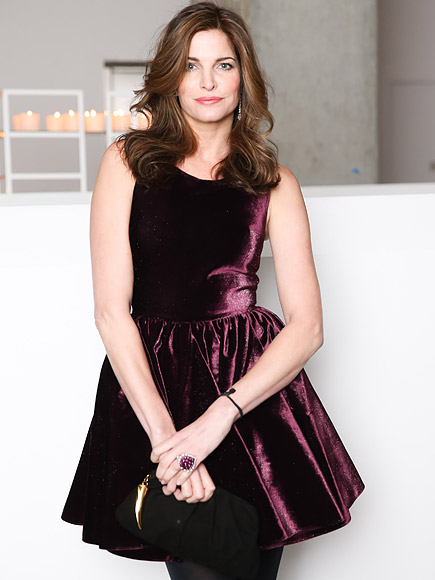
 Controversial
Nollywood actor and acting president of the Actors’ Guild of Nigeria
(AGN), Emeka Ike, has allegedly beaten up his secretary in church.
Controversial
Nollywood actor and acting president of the Actors’ Guild of Nigeria
(AGN), Emeka Ike, has allegedly beaten up his secretary in church.


 After nominations were announced Thursday morning, many quickly took
note of the fact that for the second consecutive year, all 20 acting
nominees are white. Academy president Cheryl Boone Isaacs said she was “disappointed” by the results as well, and on Saturday Smith also responded on social media.
After nominations were announced Thursday morning, many quickly took
note of the fact that for the second consecutive year, all 20 acting
nominees are white. Academy president Cheryl Boone Isaacs said she was “disappointed” by the results as well, and on Saturday Smith also responded on social media.