Monday, 7 March 2016

I like this: From unhappy employee to successful entrepreneur

BBC

Anna Ross had secured what she thought would be her dream job, but the reality was more of a nightmare.
In her early 20s at the time, the fashion degree graduate from New Zealand was working as a design assistant for a major clothing brand based in Melbourne, Australia.
She found herself having to work gruelling 90 hours weeks for little money.
"I just couldn't do it anymore," says Ms Ross, now 28. "I decided I hated working in fashion."
It was a huge realisation for someone who had spent 60,000 Australian dollars ($42,000; £31,000) on her degree.
"I was gutted," she adds.
Thankfully for Ms Ross, to take her mind off the slog of the day job and to maintain her creativity she also ran her own business in her limited free time.
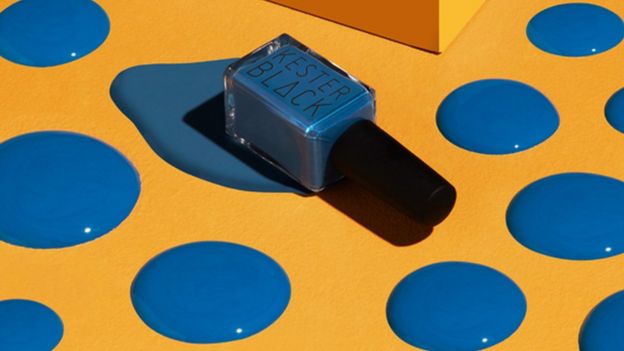
Kester Black nail polish
She had started out making clothes while studying at Otago Polytechnic in Dunedin on New Zealand's southern island, but after moving to Melbourne she switched to designing and producing jewellery in 2009. This she sold under the brand name Kester Black.
With sales helping her to pay the bills, Ms Ross then started to experiment with making her own nail polish to complement the jewellery.
She spent a year researching the complicated chemistry of nail polish production, and hired a chemist to help her make six colours.
Selling via her website and to independent shops in Melbourne the nail polish was an "immediate" hit.
So much so that Ms Ross was able to quit her day job to focus solely on her start-up business. She also decided in 2012 to stop making jewellery so she could give all her attention to the nail polish.
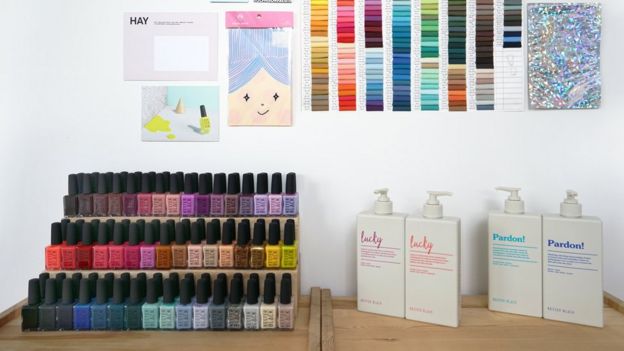
Kester Black products
"Within three months we tripled our turnover from the previous year, just making nail polish," she says.
Now four years later, Kester Black is one of Australia's most recognised independent cosmetic brands, and is also sold in the US, Malaysia and Japan.
Not bad for a business that Ms Ross still runs with the help of just one permanent employee.

'Social media savvy'

Ms Ross says her nail polish stands out in a crowded field because it is vegan accredited, not tested on animals, made in Australia, and free of the unpleasant chemicals that can be found in other brands.
"The concept of Kester Black is that you never have to look into where it's made because you now it's made here, and that the ingredients are safe," she says.
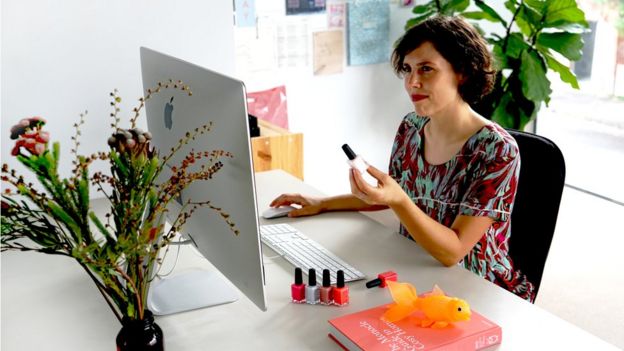
Anna Ross at her desk
Nick Bez, a director at Australian market research group Mobium Group, says that Ms Ross has also been particularly clever in her use of social media to boost Kester Black's profile.
Pointing to Kester Black's Instagram account, which is full of beautifully taken photographs, he says that Ms Ross has been "smart with her story", and that people are attracted to the lifestyle that her nail polish promotes.
Mr Bez adds: "Being savvy with social media and using the online environment to talk to a wider audience [like Kester Black], means you can be a little brand and have a persona of something much bigger."
Ms Ross admits that the popularity and visibility of the brand (which takes the first part of its name from a beach in New Zealand), has led to people thinking it is a much larger company that it currently is.

Taking risks

Although she runs a busy small business, Ms Ross's working life is a now a lot less frantic than her old job in the fashion industry.
The Kester Black office in inner city Melbourne is only open four days a week, and Ms Ross meditates on the office sofa most mornings. She also often takes time out to practise yoga.

Kester Black nail polish
However, despite this relaxed outlook, Ms Ross is also determined to make her business work.
"When I commit to something... it's thousands and thousands of dollars worth of time and energy," she says.
"I do like taking risks. But I put a lot of power and force behind them to make sure that they succeed."
Ms Ross gets around only having one permanent member of staff by hiring everyone else - from stylists to photographers and manufacturers - on a per-project basis.
As Kester Black continues to grow, both in Australia, and overseas, Ms Ross says she has to make a big decision - either slow down the rate of expansion, or continue apace.
"Should we stick with what we know, or should we keep expanding?" she says. "It's hard to know as a small business owner.
"That's something I've been asking myself for a year and a half now. Nobody can really help you with that."

How social media is affecting your relationships and sex life


It’s a regular evening and you’re lounging around, going through your Facebook news feed. One friend just posted pictures with his really attractive girlfriend, posing seductively in bathrobes on

social media and relationshipsIt’s a regular evening and you’re lounging around, going through your Facebook news feed. One friend just posted pictures with his really attractive girlfriend, posing seductively in bathrobes on a cruise deck with a sunset background.  Another friend just posted a status that says “Just got a promotion at work!”  Your roommate just posted a picture from a trendy club, sitting on the lap of a very good-looking man, winking at the camera and pouting her lips.
Before the days of Facebook, Twitter, and blogs, our knowledge of people’s intimate lives was limited. Either the curtains were closed or we could only see what was on center stage.  Today, it seems that not only is the curtain always open and there’s always stage visibility, but we have a continuous backstage pass as well.   This backstage pass translates into getting updated details on what’s going on in peoples’ kitchens, bathrooms, bank accounts, and bedrooms, all the time.
And it’s taking a toll on the ability to feel satisfied with our own lives.
It is making us feel insecure about ourselves, our possessions, relationships and most importantly, our sex lives.  And the irony is that it’s often caused by superficial images that don’t tell the whole story of what’s really going on behind the toothy grins, exotic vacations, and intense public displays of affection.
Social media doesn’t paint the real picture
In my counseling work addressing relationship and sexual issues, I often encounter the impact of social media on one’s insecurities.  For some, it seems like everyone but them is enjoying a satisfying sex life and has a blissful, loving relationship without issues.  It’s hard to imagine that that couple down the block hasn’t had sex in months because of sexual dysfunction; after all, they seem to look so perfectly happy in their Facebook pictures.  Or that beautiful co-worker goes to bed depressed every night crying that she’s single, even though she’s always blogging about her constant flow of hot dates.
Relationships are complicated and people are complicated, but there’s no disclaimer in social media reminding you that you are not seeing the real feelings and the real challenges.  Consequently, you see your friends’ lives on your timeline, compare their ‘outsides’ with your ‘insides’ and fear that you’re missing out on all the fun.
Social Media is like starring in your own reality show
Essentially, social media has allowed any person to become the star of their own reality show. To the viewer, it seems real, it looks real, and it sounds real, but it’s still what you’re seeing only when the camera is rolling.  And at least when it comes to watching celebrity reality shows, there is some recognition that they are acting or that the show is unofficially scripted to ensure there is appealing drama.
However, when it comes to being a viewer of your friend’s ‘reality show’ in social media, it can be more convincing.  They’re not as far off as celebrities are.  You don’t suspect they’re acting or that they’re being coached by a director.  You can relate to them, you look at them as in your league. Their stories are more believable. And you want to believe those stories can happen for you as well.  They can, and perhaps they will, but the image in front of you is still but an image.
How you can keep it real
It is important to be mindful of the fact that social media shows only part of the picture and recognize the impact it may have on how satisfied you feel with your own relationships. Perhaps you can decrease the amount of time you spend using social media, or have times of the week where you ‘unplug’ and do other activities that do not involve being ‘wired in’. Keep in mind that you don’t have to post every good or bad thing that happens to you and you can still celebrate life’s wonderful moments without it being broadcasted.
 Knowing yourself and what triggers you is key to improving the way you can use social media in a healthy way.  With honesty and patience, you can work on finding a balance to use social media not as a detractor from having strong relationships, but as a supplemental aid in forging closer relationships with others.

Source: healthsite.com

Ten ways WhatsApp is killing your relationship

WhatsApp messaging, WhatsApp calling and all the other features may be taking a toll on your relationship! Read this to find out.


sex-relationships-whatsapp-THS
Long before WhatsApp was created, lovers would stay in touch by writing long letters to each other where they would proclaim their everlasting love. If you missed your lover while he was away, you would re-read those carefully preserved letters and eagerly wait for the postman to deliver his next letter a few weeks later. However, even since WhatsApp and other social media platforms were created post the Internet era, instead of bringing us closer to our significant other, it has only created confusion, chaos and more fights. There are the nine ways WhatsApp is completely ruining your relationship. Before it gets too late, cut down on the amount of time you spend on these social media platforms and try giving your partner some space. Here’s how social media is affecting your relationships and sex life.
1. The main downfall of social media platforms like Whatsapp is that it forces you to keep in constant touch with your significant other. If he’s not messaging every 15 minutes or so, it starts feeling like both of you are ‘drifting apart’ and not communicating enough.
2. The blue tick marks, which is one of the latest update of WhatsApp, has only resulted in more fights among couples if there wasn’t an instant reply. ‘Why isn’t he messaging me back?’ becomes a constant thought and leads to a lot of anger and frustration.
3. If he was last seen at 6:15 pm and it is now 6:16 pm and he still hasn’t messaged you, it only leads to more arguments and break-ups over WhatsApp. The cycle keeps repeating over and over again with him until you can’t help but wonder if it is worth staying in the relationship or not. If he hides his ‘last seen’ that only leads to distrust and suspicions.
4. You end up staring at your screen repeatedly throughout the day just to check whether he is ‘online’ on WhatsApp or not or even when he was last seen. This only turns you into a full-time stalker in the long run.
5.  Spamming him with messages throughout the day won’t help in strengthening your relationship. On the contrary, it could annoy him to a great extent especially if he’s trying to concentrate on his work.
6. After a point, it will seem like WhatsApp is taking over your relationship. Most conversations will end up taking place on WhatsApp, which will only create more misunderstandings and confusion between the two of you. This is because it is very easy to misinterpret a text message since you’re not talking to him face to face.
7. Instead of spending more quality time together in real life, you both end up talking and then, eventually bickering many on WhatsApp.
8. WhatsApp will end up making your passive aggressive. Instead of confronting your partner and just telling them about whatever might be bothering you in person, you avoid doing that and instead reply with a ‘K’ or ignore their messages to hint that you’re upset. Needless to say, such passive aggressive behaviour could end up permanently damaging your relationship in the long run.
9. Talking about being passive aggressive, many people are guilty of updating their WhatsApp statuses that is nothing but a cry for attention from their partner. Instead of effectively communicating with them and sorting out your differences, you hope that through your status they will ‘get the hint’ that you’re upset.
10.‘Familiarity breeds contempt’. Constantly staying in touch with your partner through WhatsApp can result in a poorer relationship. It is important to spend some time apart from your partner and have your own life so both of you get some space and the opportunity to miss each. WhatsApp only hinders that process! Instead, switch off WhatsApp for healthy sleep.

US States With The Most Billionaires, continued

Missouri 
John Morris, the founder of Bass Pro Shops, lives in Missouri. (AP Photo/Carolyn Kaster)
John Morris, the founder of Bass Pro Shops, lives in Missouri.
Billionaire population: 6
Billionaire net worth: $28.5B
Industry with most billionaires: Fashion and retail
Missouri’s six billionaires have an aggregate net worth of $28.5 billion, derived from a variety of industries. They made money by selling outdoors equipment like John Morris, or through inheriting retail billions like Wal-Mart heiress Ann Walton Kroenke. The state’s richest person is her husband Stanley Kroenke. he owns a roster of sports teams, but is probably best-known as the man who is bringing the NFL’s Rams back to Los Angeles from St. Louis, where the franchise has been since 1995.
Montana
(Jacob W. Frank)
(Jacob W. Frank)
Billionaire population: 4
Billionaire net worth: $14B
Recommended by Forbes
Industry with most billionaires: Food and beverage
Montana’s top billionaire-making industry is food and beverages, where two of its four billionaires derived their fortunes. Siblings Austen Cargill and Marianne Liebmann are two of 14 heirs to the Cargill-Macmillan food and commodities fortune, with net worths of $3.2 billion each. Linda Pritzker uses her $1.8 billion inherited wealth to bring Tibetan philosophy to Americans, and is building a Buddhist retreat in Montana. Dennis Washington, the state’s only self-made billionaire, made his fortune in mining and construction and is worth $5.8 billion.
Nebraska 
Photograph by Michael Prince/The Forbes Collection
Billionaire population: 2
Billionaire net worth: $64.6B
Industry with most billionaires: Finance and investments, Energy
Both of Nebraska’s billionaires are self-made, and superstar investor Warren Buffett dominates the state’s billionaire wealth. He has a net worth of $60.8 billion, derived from astute investments through his company Berkshire Hathaway, the fifth largest corporation in the United States. Buffett made the biggest deal of his career in 2015, when Berkshire Hathaway paid $37 billion for industrial and aerospace parts maker Precision Castparts. His longtime friend and fellow Nebraska native Walter Scott is worth $3.8 billion. Scott got his start at his father’s construction company, and partnered with Berkshire Hathaway to invest in an electric and gas utility.
Nevada
(David Paul Morris/Bloomberg)
Billionaire population: 8
Billionaire net worth: $40.8B
Industry with most billionaires: Gambling and casinos
It’s no surprise that casinos and gambling supply most of Nevada’s $40.8 billion in billionaire wealth, but the odds are you didn’t know that seven of the state’s eight billionaires are self-made. Sheldon Adelson is the state’s richest person, with a $25.2 billion fortune made by running the Las Vegas Sands casino group, with properties in Las Vegas, Macao, Singapore and Bethlehem, Pennsylvania. He is known as the “godfather” of the GOP, having spent more than $100 million on Republican candidates in 2012. Other billionaire-making industries in Nevada include food and beverages, sports, fashion and retail.
New Hampshire
(Jeffrey Joseph)
(Jeffrey Joseph)
Billionaire population: 1
Billionaire net worth: $1B
Industry with most billionaires: Fashion and retail
Andrea Reimann-Ciardelli is New Hampshire’s only billionaire, with a net worth of $1 billion derived from the sale of her inherited stake in the JAB Holding Company. Her family had built up the business since the 19th century, though just four heirs retain stakes in the company now.
New Jersey
The wealthiest billionaire in New Jersey is the self-made hedge funder David Tepper. (Victor J. Blue/Bloomberg)
Billionaire population: 8
Billionaire net worth: $34.4B
Industry with most billionaires: Finance and investments
Like those in neighboring New York, the billionaires of Garden State derive great wealth from the finance and investments industry. Those industries minted the majority of the state’s eight billionaires, who have a combined wealth of $34.4 billion. It’s worth noting the proven business acumen of New Jersey billionaires. Every single one is either self-made, or is actively growing their inherited wealth. The wealthiest billionaire in New Jersey is the self-made hedge funder David Tepper, with a net worth of $11.4 billion.  
New York
(Michael Nagle/Bloomberg)

Billionaire population: 93
Billionaire net worth: $429.7B
Industry with most billionaires: Finance and Investments
New York state is home to 93 billionaires, and 78 of them live in New York City. Fifty-three of the New Yorkers in the three-comma club made their money in finance and investments. New York is home to titans of the billionaire class, with nine men whose net worths are at least $10 billion each, including George Soros ($24.9), David Koch ($39.6), Carl Icahn ($17B), Rupert Murdoch ($10.6), and former New York City mayor Michael Bloomberg ($40B). Eight of the top ten highest net worth individuals in New York are self-made, and the other two are growing inherited fortunes.
North Carolina
James Goodnight is one of North Carolina’s richest residents. (Kyle Hood. Bloomberg News)
Billionaire population: 3
Billionaire net worth: $14.3B
Industry with most billionaires: Technology
One technology company generated the majority of North Carolina’s billionaire wealth. James Goodnight and John Sall founded business analytics software firm SAS in 1976, and have led the company to continuous growth since then. They’re now worth $8 billion and $3.9 billion, respectively. The state’s remaining billionaire, Clemmie Spangler, has a net worth of $2.4 billion, built from a wide variety of investments.
Ohio
 Les Wexner developed some of America’s best known clothing brands, including Abercrombie & Fitch, and lives in Ohio. (Kyle Hood. Bloomberg News)
Les Wexner developed some of America’s best known clothing brands, including Abercrombie & Fitch, and lives in Ohio. (Kyle Hood. Bloomberg News)
Billionaire population: 6
Billionaire net worth: $15.3B
Industry with the most billionaires: Finance and investments
Finance and investments produced the highest number of billionaires in Ohio, including three members of the Lerner family, who have a combined net worth of $3 billion in inherited investment wealth. The state’s richest person bucks the trend with a self-made retail fortune. Les Wexner developed some of America’s best known clothing brands, including Abercrombie & Fitch, Victoria’s Secret and Bath & Body Works.
Oklahoma 
(Jeremy Woodhouse)
(Jeremy Woodhouse)
Billionaire population: 5
Billionaire net worth: $27.1B
Recommended by Forbes
Industry with most billionaires: Energy
Natural gas and oil dominates the Oklahoman economy, so it’s unsurprising that the energy industry fuels the state’s billionaire wealth. Three of the state’s five billionaires made their money in the energy industry, and one other billionaire couple derive their wealth in part  from selling gas. Tom and Judy Love (who are counted as one in the FORBES rankings) are the business family behind Love’s Travel Stops & Country Stores, a national chain of interstate-hugging gas-and-convenience stores with more than 100 locations in 39 states. David Green, another Oklahoma billionaire, is the controversial founder and CEO of retailer Hobby Lobby.
Oregon 
Phil Knight, who lives in Oregon, has a net worth of $24.4 billion and was the chairman of Nike for 51 years. (Photo by Christian Petersen/Getty Images)
Phil Knight, who lives in Oregon, has a net worth of $24.4 billion and was the chairman of Nike for 51 years.
Billionaire population: 2
Billionaire net worth: $26.1
Industry with most billionaires: Fashion and retail
Two activewear billionaires dominate in Oregon, a state known for its natural beauty and outdoors pursuits. Phil Knight has a net worth of $24.4 billion, and was the chairman of Nike for 51 years before resigning in 2015. Timothy Boyle derives his $1.7 billion net worth from global behemoth Columbia Sportswear, a family company that he rescued from bankruptcy in 1970.
Pennsylvania 
(Photo by Bruce Bennett/Getty Images)
Billionaire population: 10
Billionaire net worth: 20.3
Industry with most billionaires: Food and beverage
Of the 10 billionaires that call Pennsylvania home, seven inherited their wealth, although four of those heirs and heiresses are growing their business. The highest net worth self-made billionaire in the Keystone State is Michael Rubin ($2.3B), the 43-year-old CEO of Kynetic, a holding company that operates e-commerce sites like Rue La La. He also has a minority stake in the Philadelphia 76ers and the New Jersey Devils.
Rhode Island 
Forbes media
Forbes media
Billionaire population: 1
Billionaire net worth: $1.8B
Industry with most billionaires: Finance and investments
The smallest state in the union is home to one self-made billionaire, Jonathan Nelson. The Rhode Island native heads up $40 billion Providence Equity Partners in the state’s capital city, which had mixed success investing in a variety of ventures including a security firm, a for-profit college company, a used-car website and the Ironman triathlon series. Nelson has used his billions to fund an entrepreneurship center at Brown University, his alma mater.   
South Carolina 
Forbes media
Forbes media
Billionaire population: 1
Billionaire net worth: $1.8B
Industry with most billionaires: Manufacturing
Anita Zucker is the only billionaire in South Carolina, with a net worth of $1.8 billion. She’s the CEO of the InterTech Group, a conglomerate with interests in specialty chemicals, commercial real estate, manufacturing and aerospace parts. Zucker inherited the company from her husband when he died in 2008, having grown the company from a single plant to a multinational holding company. Today, her son, Jonathan, is president.
South Dakota 
T. Denny Sanford, the only billionaire in South Dakota, made his fortune in credit cards. (Associated Press)
Billionaire population: 1
Billionaire net worth: $1.4B
Industry with most billionaires: Finance and investments
T. Denny Sanford, the only billionaire in South Dakota, made his fortune in credit cards. His company, First Premier Bank, is one of the world’s largest issuers of Visa and Mastercards. It specializes in offering high-interest credit cards to high-risk borrowers — but keeps the credit limits low. He’s on a mission to give away as much money as possible, with hefty donations to hospitals, the Mayo clinic and children’s education projects.
Tennessee 
FedEx founder Frederick Smith lives in Tennessee (AP Photo/Mark Lennihan, File).
FedEx founder Frederick Smith lives in Tennessee
Billionaire population: 10
Billionaire net worth: $26.5 billion
Industry with most billionaires: Healthcare, Fashion and retail
Tennessee’s ten billionaires have diverse sources of wealth. The state’s biggest billionaire by far is the self-made healthcare chief Thomas Frist Jr., who founded Hospital Corp. of America with his father. Eldercare tycoon Forrest Preston is the state’s next healthcare billionaire. Jimmy and Bill Haslam made their money in retail, and have respective net worths of $2.3 and $1.6 billion. The state is also closely split between self-made billionaires like FedEx founder Frederick Smith and successful heiresses like Martha Ingram, who took over and grew Ingram Industries following her husband’s death.
Texas 
(Photo by Spencer Platt/Getty Images)
Billionaire population: 48
Billionaire net worth: $176.1B
Industry with the most billionaires: Energy
Everything’s bigger in Texas, including the billionaire count. Texas’ billionaire population is the fourth highest in the U.S. Almost half of all Texan billionaires derive their net worth from the energy industry, like Ray Lee Hunt, successful scion of the “oil-soaked” Hunt family, or self-made pipeline tycoon Richard Kinder. But the state’s three richest billionaires don’t owe their fortunes to fossil fuels. Alice Walton ($32.3B) is a Wal-Mart heiress, Michael Dell ($19.8B) founded the tech company that bears his name, and math genius Andrew Beal ($9.4B) made his fortune through smart investments.
Utah 
(AP Photo/Rick Bowmer)
Billionaire population: 1
Billionaire net worth: $1.4B
Recommended by Forbes
Industry with the most billionaires: Manufacturing
Utah’s sole billionaire is a self-made businesswoman who spent decades building an empire of car dealerships and movie theaters with her husband. When her husband died in 2009, Gail Miller assumed full ownership of the Larry H. Miller Group of Companies. She is now worth $1.4 billion, a fortune that counts the NBA’s Utah Jazz among its assets.
Virginia 
Jacqueline Mars is worth more than Virginia’s four other billionaires combined Forbes media).
Billionaire population: 5
Billionaire net worth: $32.6B
Industry with most billionaires: Finance and investments
Jacqueline Mars is worth more than Virginia’s four other billionaires combined. The candy heiress is worth $24.4 billion, though she leaves the day-to-day running of the company up to her brothers. She’s trailed by Winnie Johnson-Marquart, who inherited her net worth of $3.3 billion and runs the Johnson Family Foundation. Two of the remaining three billionaires derive their fortunes from finance and investment, making it the dominant industry in terms of billionaire number, if not wealth creation.
Washington 
Forbes media
Forbes media
Billionaire population: 13
Billionaire net worth: $180.3B
Industry with the most billionaires: Technology
Washington is home to the world’s richest man, Microsoft founder and dedicated philanthropist Bill Gates. The self-made man rules here; 10 of the the state’s billionaires built their fortunes from the ground up, and the remaining three are all growing their inheritances. Readers might be surprised to learn that just five of the Washington billionaires made their money in technology, though that number includes famous names like Jeff Bezos ($34.8B) of Amazon and Steve Ballmer ($23.5B) and Paul Allen ($17.5B) of Microsoft. Other notable billionaires include Starbucks CEO Howard Schultz ($2.9B) and department store chain president Bruce Nordstrom ($1.2B).
West Virginia
(Photo by Luke Sharrett/Getty Images)
Billionaire population: 1
Billionaire net worth: $1.6B
Industry with most billionaires: Metals and mining
Jim Justice is West Virginia’s only billionaire, and the country’s sole mining billionaire. He inherited his coal business from his father, and has faced million dollar settlements and fines following regulatory violations. He remains popular in the coal state after saving a historic resort from bankruptcy. Justice plans to run for governor in November 2016.  
Wisconsin 
Samuel C. Johnson founded his eponymous cleaning products company in Wisconsin in 1886. (AP Photo/Lynne Sladky, File)
Billionaire population: 9
Billionaire net worth: $40.5
Industry with most billionaires: Manufacturing
Wisconsin has a sizable sum of inherited manufacturing wealth. Samuel C. Johnson founded his eponymous cleaning products company here in 1886. Over a century later, four heirs to the Johnson fortune live in the state and boast a combined net worth of $13.2 billion. The retired third-generation CEO of Kohler, a toilet and faucet-making firm, also calls Wisconsin home. That said, self-made hardware store tycoon John Menard Jr. is the state’s richest man, with a net worth of $9.3 billion.
Wyoming 
The state is home to extremely wealthy heirs like John Mars (Andrey Rudakov/Bloomberg).
Billionaire population: 9
Billionaire net worth: $70.6
Industry with most billionaires: Manufacturing, Healthcare, Food and beverage, Fashion and retail
Like Tennessee’s, Wyoming’s crop of billionaires came by their wealth many different ways. The state is home to extremely wealthy heirs like Forrest and John Mars, and John and Christy Walton, who inherited billions of the Mars and Wal-Mart fortunes. But self-made individuals like medical-device tycoon Hansjoerg Wyss and consumer products billionaire Leandro Rizzuto also live here. Perhaps the diverse group chose Wyoming for its lack of income tax.

Forbes Report: There are 540 billionaires in the US, more than any other country in the world

Here Are The States With The Most Billionaires


There are 540 billionaires in the United States, with a combined net worth of $2.399 trillion, according to our 2016 list of the world’s richest people. That’s more billionaires and more combined net worth than any other nation in the world.
This is a snapshot of billionaire net worth in every state in America where they live, taken on Feb. 12. Who are the billionaires in your state? How many are there, and what are they worth? What industries do they gravitate towards?

Technology generated the majority of California’s billionaire wealth, New York billionaires earned their fortunes on Wall Street, and energy minted the billionaires of Texas. In terms of combined billionaire net worth, California and New York still lead the U.S., but Washington state usurps Texas, thanks to a certain famous tech giant-turned-philanthropist.
Seven states don’t have billionaires, but you can find their richest residents here. Sixteen American billionaires live overseas, and have a combined net worth of $46.4 billion, about as much as the billionaires of Connecticut or Illinois.
Recommended by Forbes
Arizona
(MLADEN ANTONOV/AFP/Getty Images)

Billionaire population: 9
Billionaire net worth: $22.3B
Industry with most billionaires: Automotive
The three richest men in the state of Arizona all made their money on automobiles. Bruce Halle ($5.4B), Mark Shoen ($4.6B) and E. Joe Shoen ($1.1B) have a combined net worth of $11.1 billion, but built their fortunes from different two very different components of vehicles. Halle opened the first Discount Tire Store in 1960, and has grown the business to more than 900 stores in 28 states. Shoen is the largest individual shareholder of U-Haul. His parents created the company in 1945 and Shoen served as president for 16 years starting in 1990. His brother Joe is the second-largest stakeholder and has been chairman and CEO since 1986.
Arkansas
About 84% of the $71.8 billion net worth of Arkansas’ billionaires is derived from Wal-Mart (FREDERIC J. BROWN/AFP/Getty Images).
Billionaire population: 5
Billionaire net worth:$71.8B
Industry with most billionaires: Fashion and retail
About 84% of the $71.8 billion net worth of Arkansas’ billionaires is derived from Wal-Mart. The state has five billionaires, but $65.5 billion belongs to two men. S. Robson Walton and Jim Walton are both chairmen for Wal-Mart, but Jim is also the CEO of the company his father created.  But Arkansas isn’t just about Wal-Mart: three people with significant fortunes live in the state. Warren Stephens ($2.4B), Johnelle Hunt ($2.1B) and John Tyson ($1.8B) together have a combined net worth of $6.3 billion.
California 
(Photo by Ezra Shaw/Getty Images)
Billionaire population: 124
Billionaire net worth: $532.4B
Industry with most billionaires: Technology
California has the highest population of billionaires in the United States. A whopping 124 live in the state and have a total net worth of $532.4 billion. The state’s technology industry a major source of many of those fortunes, including those of the created the five richest people in California. Mark Zuckerberg is the wealthiest among them, with a net worth of $44.6 billion, followed by Larry Ellison ($43.6B), Larry Page ($35.2B), Sergey Brin ($34.4B) and Laurene Powell Jobs ($16.7B). In all, 52 billionaires derive their wealth from the tech sector, more than any other industry in the state. Finance and investments (21 billionaires), media and entertainment (18 billionaires), and real estate (12 billionaires) also produced some of California’s wealthiest people.
Colorado 
(Photo by Kevork Djansezian/Getty Images)
Billionaire population: 10
Billionaire net worth: $38.8B
Industry with most billionaires: Media and entertainment, Food and beverage
Colorado may be known for recreation — traditionally for mountain sports, and more recently for the legal sale of marijuana — but that’s not necessarily reflected in its billionaire population. Of the state’s 10 billionaires, three derive their wealth from the food and beverage industry, and another three got rich in the satellite and cable television business. The richest man of the state is Charles Ergen, a self-made mogul who is worth $12.2 billion. He got his start selling satellite dishes from the back of his truck in Denver with his wife in 1980. Now he’s the CEO of DISH Network, but still finds time for mountain climbing.
Connecticut
This Greenwich, Connecticut home was listed at $33 million in 2015. The median home price in the area was $3.31 million at that time. (Realtor.com)
Billionaire population: 12
Billionaire net worth: $50.3B
Industry with most billionaires: Finance and investments
Greenwich, Connecticut, is one of the most expensive places to live in America, with a median home price of $2.95 million. It’s not surprising that eight of Connecticut’s 12 billionaires live there, including the richest men in the state, Ray Dalio ($15.6B net worth) and Steve Cohen ($12.7B). Ten of the dozen richest people in the state are self-made, and most of them earned their fortunes in finance and investments. The combined net worth of Connecticut’s billionaires $50.3 billion.
Florida
Russ Weiner, one of Florida’s billionaires, founded Rockstar Energy Drink in 2002. (Photograph by Ethan Pines/The Forbes Collection)
Billionaire population: 44
Billionaire net worth: $126.6B
Recommended by Forbes
Industry with most billionaires: Food and beverage
The 44 billionaires living in Florida have a collective net worth of $126.6 billion, and 27 made their own fortunes. The group of self-starters has a total net worth of $82.7 billion and includes the richest man in the state, Thomas Peterffy ($11.1B). He arrived in the U.S. in 1965 as a penniless descendant of Hungarian aristocrats who lost their fortune to the Soviets. He is now the chairman and CEO of Interactive Brokers Group. Another self-made billionaire of Florida is Shahid Khan ($5.9B). He came to the U.S. from Pakistan when he was 16 and created autoparts maker Flex-N-Gate. The privately-held company has nearly $4.9 billion in sales.
Georgia
Georgia is home to the billionaire whose wealth derives from Chick-Fil-A. (Michael Nagle/Bloomberg)
Billionaire population: 9
Billionaire net worth: $30.5B
Industry with most billionaires: Media and entertainment, Food and beverage,  Fashion and retail, Service
Like Wyoming, Georgia is home to two pairs of billionaire siblings who inherited wealth. Pest-control billionaires Gary (net worth $2.5B) and Randall Rollins ($2.5B) live here, along with Dan ($3.3B) and Bubba Cathy ($3.3B), whose wealth derives from Chick-Fil-A. Self-made individuals like the co-founders of Home Depot ($3.3B) and Spanx billionaire Sara Blakely ($1.1B) complete the state’s nine billionaires.
Hawaii
(KENT NISHIMURA/AFP/Getty Images)

Billionaire population: 1
Billionaire net worth: $7.2B
Industry with most billionaires: Technology
With its idyllic setting and tropical weather, it’s surprising only one billionaire calls Hawaii his home. Pierre Omidyar, who is worth $7.2 billion, lives in Honolulu. The eBay founder remains on the board of the auction website and PayPal, but has been slowly giving his shares in the companies to his philanthropic investment firm Omidyar Network. Despite making his fortune from technology, Omidyar has big real estate plans for the state, with plans to develop resorts and homes on the islands.
Idaho 
(EMMANUEL DUNAND/AFP/Getty Images)

Billionaire population: 3
Billionaire net worth: $5.5B
Industry with most billionaires: Manufacturing
The three billionaires in the state of Idaho are all members of one family and work in the same business. Scott, Don and Gay Simplot have a combined net worth of $5.5 billion that derives from Simplot, a supplier of potatoes, vegetables and fruit products for the food service industry. Scott serves as the chairman and CEO, while his sister Gay is a director. Don no longer has an active role in the company. In 2008, Simplot supplied  a third of America’s French fries. The company has also expanded into phosphate mining and the manufacturing of fertilizer.
Illinois
(Photo by Scott Olson/Getty Images)

Billionaire population: 17
Billionaire net worth: $43.9B
Industry with most billionaires: Finance and investments
Thirteen of Illinois’ 17 wealthiest people live in Chicago. The richest person in Illinois is Ken Griffin (net worth $7.5B) who, like 11 other billionaires in the state, made his own fortune. Griffin, the founder of the hedge fund firm Citadel, topped the 2016 Forbes list of highest-earning hedge fund managers and traders, personally making $1.7 billion. But he’s not the only Illinoisan who is making big moves. Real estate investor Sam Zell (net worth $4.8B) closed a massive deal in January 2016 in which he sold 20% of his Equity Residential portfolio — about 23,000 apartments — to Starwood Capital.
Indiana
(AP Photo/Julie Jacobson)

Billionaire population: 4
Billionaire net worth: $12.3B
Industry with most billionaires: Sports
There are four billionaires in the state of Indiana, and two own local sports teams. Herbert Simon (net worth $2.8B), is the surviving brother of an entrepreneurial duo that founded the Simon Property Group and grew it to be one of the world’s largest REITs. The Simon brothers later bought the NBA’s Indiana Pacers, a team which has doubled in value in the past year. James Irsay (net worth $2.3B) is the CEO of the Indianapolis Colts, the football team he inherited from his father. The combined net worth of Indiana billionaires is $12.3 billion.
Iowa  
(Photo by Scott Olson/Getty Images)

Billionaire population: 1
Billionaire net worth: $3.6B
Industry with most billionaires: Food and beverage 
It’s no wonder that the only billionaire from Iowa made his fortune from the state’s biggest commodity. Harry Stine, who is worth $3.6 billion, earned his wealth from the corn and agriculture business. He licenses his corn and soybean seed genetics to multinational firms like Monsanto. Stine is also working to revolutionize the corn industry by creating seeds that are bred to thrive in densely planted areas, increasing harvests. State farmers were expected to grow 2.5 billion bushels of corn in 2015, according to the U.S. Department of Agriculture.

Kansas
Forbes media
Forbes media
Billionaire population: 2
Billionaire net worth: $41.8B
Industry with most billionaires: Diversified, Technology
The ninth richest person in the world and one of the most politically influential men in the U.S. has made his home in Kansas. Charles Koch, the CEO of multinational corporation Koch Industries, is worth $39.6 billion. The firm he manages is valued at $100 billion and is the second-largest private company in America. Koch is one of two billionaires in the state. Min Kao is the other and has a net worth of $2.2 billion. Kao is chairman and CEO of GPS-maker Garmin, which sold more than 141 million products but continues to face difficult competition from smartphones.
Kentucky 
(Photo by Rob Carr/Getty Images)

Billionaire population: 1
Billionaire net worth: $2.2B
Recommended by Forbes
Industry with most billionaires: Service
B. Wayne Hughes is one of 27 billionaires in the United States to have made a fortune in the service industry. He founded the world’s largest self-storage chain in 1972, and serves as Public Storage’s chairman emeritus. He saw room to grow during the financial crisis, and bought up single-family homes to renovate and rent as the market improved.
Louisiana 
(Photo by Sean Gardner/Getty Images)

Billionaire population: 1
Billionaire net worth: $2.2B
Industry with most billionaires: Sports
Louisiana billionaire Tom Benson started off as a bookkeeper at a Chevrolet dealership in New Orleans, gradually funneling his earnings into his own string of dealerships, then local banks, and eventually, sports teams. Benson bought the New Orleans Saints in 1985 and later acquired the New Orleans Pelican basketball team in 2012. He also owns a 26-story office building and Champions Square, an outdoor entertainment venue near the Superdome arena.
Maine
(AP Photo/Robert F. Bukaty)
Billionaire population: 1
Billionaire net worth: $1.1B
Industry with most billionaires: Fashion and retail
The state best known for lobsters and summer vacations has one billionaire, Bill Alfond, who is worth $1.1 billion. Alfond’s father founded the Dexter Shoe Company in 1958, and after selling millions of boots and shoes per year, sold the firm for a chunk of Warren Buffett’s Berkshire Hathaway in 1993. Bill Alfond and his siblings made their fortunes by increasing the value of those shares, while their father turned to philanthropy in his later years, donating millions to state universities and hospitals.
Maryland
Billionaire Dan Snyder is the owner of the Washington Redskins and lives in Maryland. (AP Photo/David Richard)
Billionaire population: 8
Billionaire net worth: $23.4B
Industry with most billionaires: Finance and investments, Sports
The richest man in Maryland is on the short list of developers striving to build a new headquarters for the FBI. Ted Lerner, who is worth $5.5 billion, borrowed $250 from his wife to start his real estate company in 1952. After selling 22,000 homes, he became a builder and now owns 20 million square feet of retail and commercial space, hotels and 7,000 apartments. While Lerner’s success in real estate is remarkable, there are other industries in the state that have more billionaires: sports, for example. Dan Snyder (net worth $2.1B), the owner of the Washington Redskins, and Stephen Bisciotti ($3B), the owner of the Baltimore Ravens, both live in the state.
Massachusetts
Abigail Johnson of Massachusetts is the richest person in her state. (Daniel Barry/Bloomberg News)
Billionaire population: 10
Billionaire net worth: $39.2B
Industry with most billionaires: Finance and investments
Abigail Johnson of Massachusetts the richest person in her state, a rare title for an American woman. Just eight U.S. women are richest individual in their state. Johnson, who is worth $13.1 billion, began working for Fidelity when she was in college. She became a full-time employee in 1988 and took over as CEO in 2014. She replaced her father Edward Johnson, who is the second richest person in the state with a fortune of $7.2 billion. The Johnsons’ combined net worths make up more than half of Massachusetts’ $39.2 billion total billionaire net worth.
Michigan
Brothers Hank and Doug Meijer are the co-chairmen of Meijer and the richest people in Michigan. (Photo via Newscom)
Billionaire population: 11
Billionaire net worth: $36.2B
Industry with most billionaires: Healthcare
Out of the 11 billionaires living in Michigan, seven are self-made, with a combined net worth of $21.2 billion. That’s about 59% of the state’s total billionaire net worth ($36.2B). But despite that, the richest people in the state initially inherited their wealth and continue to grow it through their family business. Brothers Hank and Doug Meijer are the co-chairmen (Hank is also the CEO) of Meijer, a big-box store chain with more than 200 locations in six states. Meijer is the 19th-largest private company in America, with estimates sales of $15.75 billion. The brothers have been in charge since their father handed over the business in 1990.
Minnesota
The soybean growing region of central Paraguay, where many foreign companies are active, including Cargill, Monsanto, and Louis Dreyfus Commodities is helping to lead the nation to Latin America's highest growth rate for 2010, near Campo Nueve, Paraguay on Friday, Dec 17, 2010. Paraguay is among the top five soybean exporters in the world. Photographer: Noah Friedman-Rudovsky/Bloomberg
The MacMillian family makes up three out of the five billionaires in Minnesota and derive their wealth from Cargill.
Billionaire population: 5
Billionaire net worth: $10.6B
Industry with most billionaires: Food and beverage
The MacMillian family makes up three out of the five billionaires in Minnesota. With a combined net worth of $6.7 billion, the clan members derive their wealth from Cargill, the international food conglomerate that was founded in Minnesota in 1865 and is now the largest privately held corporation in the United States. Whitney MacMillian (net worth $4.7B) was the last family member to serve as CEO, retiring in 1995. Martha and John MacMillian are also billionaires, each worth $1 billion. Read more here...