Nothing kills the mood like unrealistic expectations and constant criticism.
The fact that you are expecting perfection from your woman might be what is killing your sex life.
According to a recent poll, the imposition of sexual perfectionism can lead to sexual dysfunction
as it leads to women having a negative self-image of themselves.
Nothing kills the mood like unrealistic expectations and constant
criticism.
The study asked the respondents questions about desire, arousal, lubrication, orgasm, satisfaction and pain. They also answered questions
about sexual performance standards imposed by themselves on themselves,
by themselves on their partners, by their partners on themselves and by
society on themselves. They were given a follow-up 12 weeks later.
It
was found that partner-prescribed perfectionism was the worst sex move.
It is not only associated with lower sexual esteem and higher sexual
anxiety, but predicted longitudinal decreases in sexual esteem and
increases in sexual anxiety.
As well,
partner-prescribed sexual perfectionism is a psychological factor that
may contribute to sexual self-concept problems in women.
So,
in conclusion, positive reinforcement and encouragement is the best way
to get her to open up sexually. Accusing her of being bad in bed, not
doing something well, comparing her to an ex or another woman sexually
will only cause her to withdraw even more, making her uninterested in
sex with you.
The
President, Muhammadu Buhari had earlier in the week stated that he
would like to go over the recently approved 2016 budget before signing
off on it.This delay has led to government activities being unable to
move forward as many of the agencies are finding it difficult to
implement their programmes.
It was gathered that capital projects, whose contractors would have
gone back to sites, remained abandoned as the first quarter of the year
ended on Thursday.
According to a statement by his Special Adviser on Media and
Publicity, Mr. Femi Adesina, Buhari had, in Washington DC, ruled out
early signing of the budget and this has in turn affected the
productivity of the government many of the ministries are having
challenges getting supplies from their contractors.
According to the Punch, the ministry of finance have seen their
supplies of stationery limited owing to what officials described “as a
wait and see attitude of the suppliers.”
The same situation is also being experienced in the ministry of trade and investment and that of budget and national planning.
A top government official in one of the ministries told the Punch
correspondent that as a result of the budget delay, many capital
projects could not be funded.
According to him, many contractors handling the projects had thought
that they would go back to sites within the first quarter of this year
following meetings they held with the government.
He, however, said that the projects, including the Kano- Maiduguri
Road, which have budgetary allocations of N16bn; Abuja-Lokoja Road
(N10bn), and Apapa-Oshodi Road (N5bn), remained abandoned.
Other affected projects are the Sokoto-Kontagora Road project where
the sum of N4bn had been allocated in the budget; Ilorin-Jebba road
project N6bn; Itu-Ikot-Ekpene road project N6bn.
Many of the projects were carried over from the 2015 financial year.
The official said currently, only critical recurrent expenditure
items that had to do with travel expenses of ministers were being met.
The source said, “You will recall that this year’s budget has sparked
a lot of controversies and as such nobody is certain of what will be
the outcome in terms of the expenditure items that have been proposed by
each MDA.
“For instance, in our ministry, majority of expenses have been put on hold owing to the fact that the budget is not ready.
“As we speak, stationery has not been supplied in the store because we don’t know how much would be approved for that purpose.
“Also, some of the workers who did overtime have not been paid their
allowance, even the running of the power generating set is being
threatened because suppliers have started demanding payments.
“So everything is practically on a standstill waiting for the budget.”
Construction firms said they had yet to receive a dime from the
N350bn which Buhari’s administration promised that it would use to
revive the economy, particularly in settling part of the over N600bn
debt owed contractors across the country.
In March, the Federal Government announced that it would inject
N350bn into the economy in order to revive the country’s economic
activities, and stressed that the fund would be used to largely pay the
debts owed contractors in Nigeria.
But when contacted on Friday, contractors under their umbrella body –
Federation of Construction Industry, told one of our correspondents
that they had yet to receive a dime from the administration, despite the
fact that the government owed them over N600bn.
Speaking on behalf of contractors and construction firms, the
President, FOCI, Mr. Solomon Ogunbusola, stated that he was not aware of
any payment to any contractor or construction company with respect to
the debt owed them.
Asked if contractors have been receiving payments from the N350bn
fund, Ogunbusola said, “I am not aware. Maybe the government wants to
borrow or it is planning something else. You know me very well that if I
am aware I will tell you that I’m aware.
“We spoke and made it public that the debt to contractors was over
N600bn and I told you clearly about it. After that, the government said
we should go and bring our documentation and we did, but since that time
we have not heard anything.”
When probed further on why contractors had yet to mobilise to
construction sites across the country, he replied, “If the money has
been paid, then you don’t need to call us before we will mobilise the
equipment the next morning.
“You can call the ministry of finance and clarify if the ministry has
given money to the construction industry. If it says yes, please ask
the ministry the amount.”
Officials from the Federal Ministry of Power, Works and Housing
corroborated the statements of the FOCI president, as they told one of
our correspondents that the Federal Government had yet to disburse the
funds to construction firms.
“The funds have not been given out and I think it is because the
government is taking time in making sure that the right persons or
companies are captured when such payments commence,” an official who
spoke on condition of anonymity as he was not authorised to speak on the
matter, said.
Here are five unfortunate, yet incredibly true reasons why girls don’t like a guy: 1. You’re unattractive. Whether it’s your body type,
your height, your face, or whatever, a girl just may not find your
physique attractive at all. Okay, but what if I go to the gym and
improve myself enough to make myself more attractive? Sure, go for it!
Get in the best shape of your life! But, if you’re going to “improve
upon yourself,” make sure these are actual changes that you want to see in yourself because not every girl likes a gym rat. You really just can’t win them all. 2. You have a horrible lifestyle.
You
probably play video games too much, you binge on TV shows way too often
and you probably drink until you pass out multiple days of the week.
Girls want to be part of a life that is actually somewhat exciting to
them and it starts with you. Do something that can change your life for the better or else you may end up alone. 3. You’re the “nice guy.”
Never
believe any girl that says they go for the “nice guy” because it simply
isn’t true. Nice guys are easily taken advantage of, they lack
confidence and they give girls way too much attention. Translation? Nice
guys are BORING. I now understand why girls don’t usually go for the
“nice guy.” Girls want to turn that so called “bad boy” persona into a
“nice guy.” Why? Because girls like a challenge and it’s in a girl’s
nature to nurture someone. The solution? Stop being the “nice guy!”
Being a “nice guy” is not a bad thing, but it can hurt you sometimes. At
the same time, don’t be a complete douche either. It’s about finding
the perfect balance between the two. 4. You have a poor attitude.
This
even goes past the realm of why girls don’t like you. To be honest,
having a negative attitude sucks. Negative attitudes are the worst
thing, especially around girls. A girl wants to be with someone that
will bring her spirits up, not down! Turn that negativity into
positivity, and you’ll see a big change! 5. You care about girls way too much.
This
sounds a little counter-intuitive, but showing a girl you care too much
makes that girl feel responsible for not only her, but for you as well.
A girl wants a guy that doesn’t allow little things to affect his life
on a day-to-day basis. So, what do you have to do? Be yourself. Don’t
change yourself to get a girl to like you, because it will bite you in
the ass in the end. There is someone special out there for everyone.
Don’t do random things you don’t like just to get a girl to like you;
eventually you’ll realize down the road that what you are doing is
stupid
A Palestinian Teacher’s Methods Earn the Attention of More Than Her Class
A Palestinian Teacher’s Method
Hanan Hroub, an elementary-school
teacher, with her students in the West Bank city of Ramallah in
February. She recently won a $1 million global education prize.
EL-BIREH,
West Bank — The noise signaled that Hanan Hroub’s second-grade students
were not focusing on their assigned task of scrawling math problems on
balloons. Instead, they were staring at the latest interloper, a tall
German journalist, treading through their classroom to meet their
“Miss,” as Palestinians call teachers, who recently won a $1 million global education prize.
And they were popping those balloons.
Since
the prize was announced March 13, Palestinian officials have honored
Ms. Hroub with festivals and honorary degrees. International reporters
have raced to her house and classroom. Some Israelis have denounced her
as part of a Palestinian education system they see as inciting violence,
and noted with dismay that her husband assisted in the killing of six Jewish settlers in the West Bank city of Hebron in 1980.
Amid
all that hubbub, Ms. Hroub, 43, still faced the essential challenge of
every elementary-school teacher: keeping children on task. On the
morning of the balloon exercise, she had put four marks underneath a
frowning yellow face pasted to the whiteboard. The smiling face next to
it had only a single mark.
“No,
Miss! No! We will concentrate, we promise!” piped up a girl named
Shurouq. Ms. Hroub and her charges discussed why they felt distracted,
and promised to do better.
Ms.
Hroub had just returned to school from Dubai, in the United Arab
Emirates, where she received the prize from the Varkey Foundation in a
ceremony involving Vice President Joseph R. Biden Jr. and Prince
William, as well as Pope Francis by video.
The
foundation said she had been selected from the original 8,000 nominees
for teaching methods built around educational games that she created for
children traumatized by violence. The award came at an awkward time:
Palestinian teachers, including Ms. Hroub, had been on strike for weeks,
demanding better pay. (The Palestinian Authority acceded to a 10 percent salary increase hours after the prize was announced.)
A
mother of five children, now age 18 to 23, Ms. Hroub said she developed
her play-therapy approach to education for her own children, after
Israeli soldiers shot at their family vehicle at a military checkpoint
near Bethlehem in 2000. Ms. Hroub said she was not in the car and did
not know why the soldiers opened fire, but that her husband, Omar, who
had spent a decade in Israeli prisons, was wounded.
After
the episode, she said, her children often woke up screaming at night,
and became aggressive. “The teachers at their schools weren’t trained to
deal with that, and I feared that I was losing my children,” she
recalled.
Over
time she realized that her children were at their calmest and happiest
while playing. She began scrambling to think of games they could play
together. She built a games section in a corner of the house and told
the children that was their safe place.
During
that time, the violent years of the second intifada, the Israeli
authorities imposed curfews on the Bethlehem area where she then lived.
When the curfews were lifted, sometimes briefly, “other women raced to
buy food,” she said. “I raced to the news agency to buy papers, crayons,
markers, whatever I could to make games for my children.”
Having
seen how much the games helped her children to cope, Ms. Hroub, who
grew up in Dheisheh, a cinder-block refugee camp in Bethlehem, decided
to become a teacher to expand their reach. She enrolled in college,
fulfilling a dream delayed in part by West Bank campuses having been
closed when she finished high school because of the first Palestinian
intifada, and has been at the front of a classroom since 2005. She has
refined her methods, frequently taking games from educational websites
and tailoring them to the Palestinian experience.
“Everything begins with an idea,” she said. “Then I tried it on my children, then in a classroom. Now, the world knows.”
Scenes from Hanan Hroub's classroom in the West Bank posted online last fall. Video by Hanan Hroub
Ms.
Hroub said she planned to use the $1 million prize money to create a
foundation promoting the games. While the Palestinian Education Ministry
has sent dozens of teachers to observe her classroom, she said the
method has not really caught on, something she attributed to a cultural
resistance by people who think play is frivolous.
“Every
year it’s the same,” she said. “The parents are in shock: Are our kids
playing at school? And then they start seeing results.”
Not test score results, emotional results.
She
pointed to a big-boned boy who was on the brink of being expelled for
bullying. The boy’s father begged Ms. Hroub to work with him and she
agreed, on the condition that the parents promise never to hit him. The
day of the balloon exercise, Ms. Hroub reprimanded the boy twice but
also showered him with praise when he completed his work. After he
snatched a pencil and pushed a girl, she gently sat him next to one of
the better-behaved students.
“This boy that you see today is a different child from the one who entered my classroom,” she said.
That
brightly painted classroom on the second floor of the tidy Samiha
Khalil School is a stark departure from the typical Palestinian
classroom of desks in neat rows. For math, the students ran around
holding numbers from 1 to 9, getting together in pairs that added to 10,
then knocked odd-numbered balls into a rabbit’s mouth to review odds
and evens.
At
story time, Ms. Hroub donned a rainbow-colored wig over her Islamic
head scarf and pinched on a red clown nose, reading about a naughty
spider named “Sha-sha-sha-sha-ban.”
She
prodded the children toward what she called “peaceful” ways of
disagreeing, including with her. One child dissented from her decision
to move him after hitting a classmate. “You oppressed me, Miss,” said
Laith, 8. They talked it out.
Ms.
Hroub said she was not political and would welcome her practices being
instituted in Israeli classrooms. Yet, one wall of her classroom has an
enormous map of the region that does not acknowledge Israel’s existence.
As Ms. Hroub took the children on an imagined drive through Jerusalem,
they “toured” Muslim and Christian sites, but she made no mention of
Jewish ones.
Since
the prize was announced, some pro-Israel groups have criticized the
foundation online because Ms. Hroub’s husband — now a legal adviser to
the Palestinian Authority — was involved in the 1980 ambush of a group
of Israelis trying to revive a Jewish settlement in Hebron. (Some
Palestinian news sites have praised him as the “mastermind” of the
attack, though a New York Times article at the time described him as having assisted.)
Others
complained that any Palestinian teacher was honored. Itamar Marcus,
whose Palestinian Media Watch chronicles anti-Israel and anti-Semitic
statements in the Arab news media and who has long complained that
Palestinian schools educate students to hate, said that even if Ms.
Hroub was an excellent teacher, the award would be seen by the
Palestinian Education Ministry “as a confirmation that what they are
doing is O.K.”
Mr.
Marcus complained that 25 Palestinian schools were named after
militants who had killed Israelis or Jews, and that youth sporting
tournaments similarly honored so-called martyrs. He said that videos
broadcast on Palestinian television showing schoolchildren praising such
attacks suggested what they were being taught to do so.
Jamal
Dajani, a spokesman for the Palestinian government, dismissed that
suggestion. “Palestinian children are constantly subjected to Israeli
soldiers and armed settlers waving guns in their faces,” he said. “This
is enough cause for incitement.”
Ms.
Hroub waved away questions on politics. “I’m a teacher. That’s me,” she
said. “I can’t change history, what happened before 10 or 20 years.”
Back
in class, Ms. Hroub ended the balloon-math challenge because it was not
going anywhere. To change the mood, she played a YouTube video of a
baby laughing, and the students collapsed into giggles. They threw their
balloons in the air, stomped on them and danced. They sang about a
Palestinian grandmother, and discussed dental hygiene. They quietly
settled into some language exercises.
With a grin, Ms. Hroub drew a mark under her smiling emoticon on the whiteboard.
“Another, Miss! We deserve another!” a girl called out.
She drew another two strokes, prompting cheers from the children: The happy and sad faces now had the same number.
Indonesia
says it may ban Hollywood actor Leonardo DiCaprio from returning over
his comments on rainforests being cleared for palm oil plantations.
Mr DiCaprio entered Indonesia on a tourist visa and on Sunday visited Gunung Leuser National Park in Aceh.
“A world-class biodiversity hotspot… but palm oil expansion is destroying this unique place,” he posted.
If the comments were judged as “incitement”, he would be banned in future, a top official revealed.
”In terms of [his] visa and immigration permit, Leonardo DiCaprio did
not do anything wrong: He entered and left Indonesia legally. But, we
still investigate,” Heru Santoso, spokesperson for the director general
of immigration department, said.
“If DiCaprio’s posting in his social media can be categorised as
incitement or provocation, we can blacklist him from coming back to
Indonesia.”
It is not the first time a Hollywood star has run into trouble in Indonesia over their environmental activism.
Star Wars actor Harrison Ford was threatened with deportation in 2013
for “harassing state institutions” after interviewing the then forestry
minister about illegal logging.
Angel
Di Maria has criticised Louis van Gaal for playing him in the wrong
position at Manchester United and says he left the club for Paris
Saint-Germain to win titles.
The Argentina international spent one underwhelming season at Old Trafford after a British record transfer from Real Madrid.
The
28-year-old has since become a key player at PSG, playing a big part in
helping them already win Ligue 1 this season while they are also in
contention for the Champions League.
And Di Maria blames Van Gaal
for his failed spell in the Premier League, insisting that nothing has
changed at the club since his departure.
“It’s not nice to say
certain things, but it’s more that they didn’t let me settle properly
than I couldn’t settle,” he told BBC. “I left and that team are still
playing the same way. Out of the European competitions, far from being
champions of the Premier League.
“I don’t think it was my fault or
the fault of my team mates. Every time I was given the opportunity, I
did all I could but it didn’t work out as I hoped.
“So
I decided to leave, not only to be happy but to win things. I started a
game in one position then the next game in another. I scored goals
playing in one position, then suddenly the next game I was picked to
play in a different position.
“I think this also didn’t help me
settle. It’s up to the manager to decide where and how every player
should play, but I think that the player should be comfortable in that
position and adapt to it.”
Di Maria is happy with life at PSG, admitting that he has felt comfortable playing under coach Laurent Blanc from the beginning.
“That
is what I’m doing here at PSG and I’m very thankful to the coach for
it. From the beginning he was clear where he wanted to play me and has
never changed his mind,” added Di Maria.
“He gave me total freedom to move where I needed to move. I’m very happy here and it wasn’t the case over there.”
There
were indications yesterday from the Petroleum Products Pricing
Regulatory Agency (PPPRA) that the product may be sold for N88 per litre
at the Nigerian National Petroleum Corporation (NNPC) stations and
N88.50 in other stations starting from today.
Until this new template, the NNPC’s official price for a litre of
fuel was N86 while for others it was N86.50. The new price mechanism
that is expected to take effect today is a requirement of price
modulation system that is reviewed every quarter.
The proposal for the price template for the second quarter of the
year (April to June) was tabled before the Minister of State for
Petroleum Resources, Dr. Ibe Kachikwu by the PPPRA boss, Mrs. Sotonye
Iyoyo early this week.
It could not be ascertained yesterday whether the substantive
Minister of Petroleum Resources, President Muhammadu Buhari, who is
attending a conference in Washington DC in the United States, approved
the template before leaving the country.
The breakdown indicates that government is expected to get N400
million daily as the country still operates on over-recovery basis,
which means that Nigerians are paying extra N10 on every litre of petrol
they buy at the filling stations.
With an estimated 40 million litres of petrol consumed per day, the
Federal Government will mobilise about N36 billion into the dedicated
account that is opened in the Central Bank of Nigeria (CBN) for
over-recovery funds in the second quarter of 2016.
The price template on the PPPRA website that was last updated on
March18, 2016 indicates that the landing cost of petrol stood at N71.49
kobo while ex-depot (for collection) was put at N76.50 kobo. But this is
expected to change within the first few hours of today.
Meanwhile, the Federal Government has increased import allocation
permits for petrol, from three million metric tonnes in the first
quarter, to 3.5 million tonnes in the second quarter.
The Minister of State for Petroleum Resources, Dr Ibe Kachikwu, said
it waded into the supply chain with the Independent Petroleum Marketers
Association of Nigeria (IPMAN), as part of moves to end the lingering
fuel scarcity in the country.
The NNPC restated its commitment to boosting the nation’s refining
capacity, which in turn would put an end to the perennial fuel scarcity
in the country.
PPPRA spokesman Lanre Oladele disclosed that the allocation was issued to NNPC and other private fuel marketers.
Among the 47 companies to benefit from the allocation are; Oando, Sahara
Energy, Forte, Conoil, MRS Oil and Gas, Shorelinks, Hyde Energy, Heyden
and the local downstream subsidiaries of ExxonMobil and Total.
In the first quarter the regulator handed 78 per cent of the
allocation to NNPC and 22 per cent to private companies and fuel
marketers.
According to the spokesman, the allocation ratio has been reversed in
the Q2 programme, with NNPC handling 41.7 per cent and private
marketers 58.3 per cent.
Louis van Gaal has admitted he might not be manager of Manchester United next season.
The
Dutchman has come under severe pressure this term, with the Red Devils
unlikely to improve on last season’s fourth-place finish.
United
could even finish outside the Champions League places altogether – they
are currently sixth with eight matches remaining – and Van Gaal has
conceded for the first time he could pay the price with his job. “I think the board has to evaluate after the results of this year, what they have to do,” he said.
“I cannot predict that when I do not know the facts. First you have to see the facts, I have always said that.
“The results and the titles and Champions League positions you can only say at the end.
“I am a rational person. I know a Manchester United manager has to win something, but I am still working on that.”
Van
Gaal has been criticised for failing to get the best out of many of the
players at his disposal, with former winger Angel Di Maria recently
claiming that he struggled at United because he was played out of
position.
But Van Gaal has hit back at the Argentina
international, insisting he must take some of the blame for an
underwhelming single season at Old Trafford in 2014/15.
“I have never seen a player who doesn’t look at himself [like him].
“He looks at the way he performed here and [claims] it is always the fault of the manager.
“So he is one of the players who has no self-criticism. Unfortunately it is my life as a manager. It is always like that.”
United
host Everton on Sunday as they continue their challenge for the
Champions League places, with fourth-placed Manchester City in action
against Bournemouth on Saturday.
An
advocacy group has released rather unsettling news detailing the
horrific tale of how at least 98 Central African Republic (CAR) girls
were allegedly sexually abused by international peacekeepers.
The report was released by AIDS-Free World, an international advocacy
organization, on Wednesday. The group said that MINUSCA, the UN’s
peacekeeping mission in CAR, met with local leaders and victims “who reported that troops from France and Gabon have sexually abused several girls in their province.”
The group cited three CAR girls who said that they, along with a fourth girl, were raped by UN peacekeepers.
The girls said they “were tied up and undressed inside a camp by a
military commander from the Sangaris force (the French military
intervention in CAR) and forced to have sex with a dog,” the group wrote.
Then after the debasing act, each girl was reportedly given 5,000 Central African Francs ($9) or roughly N1800 “The three girls interviewed sought basic medical treatment. The
fourth girl later died of an unknown disease. One of the survivors said
that she was called ‘the Sangaris’ dog’ by people in the community.”
According to the group, the alleged perpetrators “left CAR, returning home in 2015.”
Also the organization mentions one more case of a 16-year-old girl who was allegedly raped by a Congolese UN peacekeeper.
The girl’s mother told police that the peacekeeper “raped her daughter in a hotel room at 4pm on Monday, March 28, 2016.” “When police questioned the accused in the presence of his UN
military commander, the soldier confirmed that he ‘had sexual
intercourse’ with the victim several times, and paid her between 2,000
and 3,000 Central African Francs [$3-5dollars].”(or N600-N900)
The report was sent directly to UN Secretary-General Ban Ki-moon, who immediately issued a response, expressing his horror. “I am shocked to the core by the latest allegations of abuse by
international forces in the Central African Republic. Our focus must be
on the victims and their families. We are talking about women and young
children who have been traumatized in the worst imaginable way,” Ban said in a statement, released by the UN.
He added that these crimes by UN peacekeepers “only fester in silence.”
“Yet, we must face the fact that a number of troops who were sent to protect people instead acted with hearts of darkness.”
Earlier in March the UN Mission in the Central African Republic
(MINUSCA) said it received new allegations which refer to incidents
which occurred in 2014 and 2015 in the Kemo prefecture of the CAR.
The UN investigation into “these sickening allegations, which
suggest sexual abuse and exploitation of a large number of women and
girls, must leave no stone unturned,” said UN High Commissioner for Human Rights Zeid Ra’ad Al Hussein. “We are taking these allegations – some of which are particularly
odious – extremely seriously. It is vital that the victims are
protected and receive all necessary care,” he said.
The United Nations currently has 106,000 troops and police serving in 16 peacekeeping missions.
(culled from rt.com)
Ghanaian
President, John Dramani Mahama has said that citizens from Nigeria and
other African countries must apply for visas before being allowed entry
into Ghana.
Mahama made this statement during his State of the Nation address earlier this month.
The President said visas will be issued at the entry point and would attract an option of 30 days stay in the country.
This policy will take off from July before they will be allowed to enter Ghana.
“With effect from July this year, we will be allowing
citizens of AU Member States to enter our country and obtain visas on
arrival with the option to stay for up to thirty days and experience
what our country has to offer,” said President Mahama in his address. “This measure, with time, should stimulate air travel, trade, investment and tourism.”
Citizens from only 15 African countries, mostly from the ECOWAS
member countries including Nigeria, currently enjoy free entry into
Ghana.
Sen.
Chris Ngige, the Minister of Labour and Employment, says the Federal
Government has initiated empowerment programmes to engage unemployed
youths against the proposed N5,000 monthly stipend.
Ngige
disclosed this at the Special Day of the National Directorate of
Employment (NDE) at the ongoing 27th Enugu International Trade Fair on
Friday.
Dr Chris Ngige Dr Chris Ngige Dr Chris Ngige He said that there were ample opportunities for unemployed graduates in the country in the 2016 Budget.
“Instead
of paying youths N5,000 monthly for doing nothing, the government has
initiated plans to engage hundreds of thousands of youths in the country
with over 10 empowerment programmes.
“Some of the intervention
programmes will be spearheaded by the NDE including Teach Nigeria, skill
acquisition and community services,” Ngige said.
The minister
said that some of the youths would be employed at the end of the
programme, while others would be assisted to start their own businesses.
“When you enter the programme, the person would be earning far more than N5, 000 depending on his or her input,” he said.
Ngige
said that the Federal Government had started taking stocks of all the
skill acquisition centers in the country and would soon roll out
training programmes for them.
He
said that he appreciated the support of the private sector in the
provision of jobs, stressing that creation of sustainable employment in
the country was basically a challenge for the private sector.
The
minister said that there was need for economic diversification from oil
to other areas such as agriculture and pledged government’s commitment
to tackle poverty in the country.
Earlier, the Acting Director
General of NDE, Mr Kunle Obayan, also expressed the commitment of the
directorate at reducing unemployment rate in the country to minimal
level.
He thanked the Enugu State Chamber of Commerce, Industries,
Mines and Agriculture (ECIMMA) for its continued partnership with the
directorate and for conducting a successful fair.
The President of
ECCIMA, Rev. Ugochukwu Chime, thanked the minister and the NDE for
always contributing to the success of the fair in the state.
Chime described NDE as a strategic partner in the international trade fairs in the state.
He
said that the theme of this year’s fair was in line with the chamber’s
resolution to improve the economy through economically driven actions
and policies.
The theme of the ongoing fair is ‘Diversification of the Nation’s Economy: From Rhetoric to Coordinated Action’.
The
Executive Governor of Ekiti State, Ayodele Fayose has once again
attacked the President of the Federal Republic of Nigeria over his
‘needless foreign trips’.
The governor called on well meaning Nigerians to prevail on the
matter as he, Fayose, described the President’s trip to the United
States of America on Wednesday for the 4th Nuclear Security Summit as
“joke of the year”.
Fayose said; “It remains a mystery what President Buhari that met
power generation at 6,000MW and could not manage it such that power
generation crumbled to 0MW yesterday, will contribute to the Nuclear
Energy Summit in America.”
the Ekiti State Governor through his Special Assistant on Public
Communications and New Media, Lere Olayinka, added that; “It is shameful
that while President Buhari was far away in the United States of
America, attending a summit that does not have any bearing on Nigeria
and its people, an unprecedented happened – power generation stopped
completely for over three hours!”
Fayose also noted that Nigerians, in their suffering need the all
round attention of the President who instead of facing the problem at
hand squarely was busy junketing around the world, wasting the country’s
scarce foreign exchange.
He added that an estimate of over $50 million must have been spent on
the President’s frequent foreign trips, “Nigerians are suffering.
Petrol has become so scarce that our people now sleep in petrol stations
to buy fuel at N200 per litre while the president who should alleviate
their sufferings is in the USA, attending a summit that he won’t even
understand whatever that is discussed there.
“This is not acceptable. Mr President should stay at home and see to
it that at least, power generation returns to 6,000MW that he met it if
he cannot add to it.
“Mr President should stay at home and bring this fuel scarcity that
has paralysed almost all activities in the country to an end.
“Nigerians are saying their president should stay at home and bring
to an end the killings, raping of women and destruction of farmlands by
Fulani herdsmen.
“Most importantly, the President should listen more to those of us
who criticise him instead of those hailing every of his wrong steps
either because of what they intend to gain or for fear of persecution.”
Ekiti
State Governor Ayodele Fayose has called on well-meaning Nigerians to
prevail on President Muhammadu Buhari to stop his needless foreign
trips, describing the president’s trip to the United States of America
on Wednesday for the 4th Nuclear Security Summit, while Nigerians are
suffering at home, as “joke of the year.”
The governor said, “It
remains a mystery what President Buhari that met power generation at
6,000MW and could not manage it such that power generation crumbled to
0MW yesterday, will contribute to the Nuclear Energy Summit in America.”
Speaking
through his Special Assistant on Public Communications and New Media,
Lere Olayinka, Fayose said, “It is shameful that while President Buhari
was far away in the United States of America, attending a summit that
does not have any bearing on Nigeria and its people, the unprecedented
happened – power generation stopped completely for over three hours!”
He said the sufferings of Nigerians deserved the attention of the
president instead of him junketing around the world, wasting the country’s scarce foreign exchange.
The
governor alleged that over $50 million must have been spent on the
president’s frequent foreign trips, adding that Nigerians should ask
President Buhari whether his trip to the United States of America to
attend Nuclear Energy Summit would bring the lingering fuel scarcity
being experienced in the country to an end.
“Nigerians are
suffering; petrol has become so scarce that our people now sleep at
petrol stations to buy fuel at N200 per litre, while the president, who
should alleviate their sufferings, is in the USA, attending a summit
that he won’t even understand whatever that is discussed there.
“This
is not acceptable. Mr. President should stay at home and see to it that
at least, power generation returns to 6,000MW that he met it if he
cannot add to it.
“Mr. President should stay at home and bring
this fuel scarcity that has paralysed almost all activities in the
country to an end.
“Nigerians are saying their president should
stay at home and bring to an end the killings, raping of women and
destruction of farmlands by Fulani herdsmen.
“Most importantly,
the President should listen more to those of us who criticise him
instead of those hailing every of his wrong steps either because of what
they intend to gain or for fear of persecution,” the governor said.
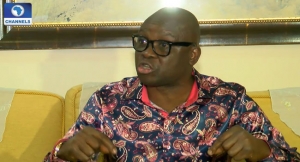
The Governor of Ekiti State, Mr Ayodele Fasoye, has described the President’s trip to the United States as needless.
Governor Fayose, in a statement, said that the President should
concentrate more on tackling the economic challenges in the country.
“It remains a mystery that President Buhari met power generation at 6,000mw but today it has dropped to 2,695mw”.
The Governor insisted that what should be of interest to the
President should be the suffering of Nigerians rather than what he calls
junketing around the world.
“This is not acceptable. Mr President should stay at home and see to
it that at least, power generation returns to 6,000MW that he met it if
he cannot add to it.
“Mr President should stay at home and bring this fuel scarcity that
has paralysed almost all activities in the country to an end.
“Nigerians are saying their president should stay at home and bring
to an end the killings, raping of women and destruction of farmlands by
Fulani herdsmen.
“Most importantly, the President should listen more to those of us
who criticise him instead of those hailing every of his wrong steps
either because of what they intend to gain or for fear of persecution,”
the Governor said.
The Minister of State for Petroleum, Dr.
Ibe Kachikwu, appeared before the Senate Committee on Petroleum
Resources (Downstream) on Tuesday to give reasons for the acute fuel
scarcity across the country and the efforts being made by his ministry
to resolve the embarrassing situation.
He regretted the situation and
apologised to Nigerians, who he said were really going through difficult
moments, and promised that the scarcity would end on or before April 7.
Kachikwu said he would not resign from
his position as minister and instead asked those who were threatening to
stage a protest in Abuja to save their money because he took the
appointment to work for his fatherland.
The minister stated, “I will not resign.
I am here to do my job. Those who are planning to stage a protest
against me in Abuja should save their fuel money because I have a job to
do, and I am committed to doing it well.
“I share the pains of Nigerians. I feel
that pain every day. I walk the streets and those who are following my
trajectories since I resumed office would see that even on Christmas
day, I was at the refineries. On Easter Day, I was in Lagos monitoring
fuel distribution at the depots.
“I have given 24/7 attention to the
problems in this industry, which are unbelievable. I have continued to
work with one sole purpose in mind, which is that every problem will
have a solution.”
Kachikwu added, “I do apologise if a
comment I make jocularly with my friends in the press about not being a
magician offends some Nigerians; it wasn’t meant to be. It is a side
jocular issue and I did go ahead to explain what needed to be done. I
didn’t intend to create this kind of hyperbole that it did.
“Let me admit that I am not a typically
experienced politician. I am a technocrat. Some of the phraseologies
that I may use, while being acceptable in the arena in which I play,
obviously will not be acceptable in the public political arena. If
anybody’s sensitivities were offended by that, I totally apologise.”
He attributed the current petrol
scarcity to the refusal by the major oil marketers to import, diversion
of the product by marketers, pipeline vandalism, panic buying and
non-computerisation of the distribution network to monitor trucks.
The minister lamented that since the
payment of N600bn subsidy arrears, which the current administration
inherited from the administration of former President Goodluck Jonathan,
oil marketers had stopped fuel importation.
The development, he said, had forced the
Nigerian National Petroleum Corporation to overstretch its capacity,
human resources and facilities in order to bridge the gap, but that the
corporation lacked the immediate capacity to handle the task.
Kachikwu said, “Let me put the reasons
for the scarcity in three categories. First, when we came in August,
this country had arrears of unpaid subsidy claims that were in excess of
N600bn, which were not paid for over a year.
“Progressively, over a period of eight
months, prior to my coming on board, people had been staying away from
importation not at a heavy level, but by about 10 to 15 per cent of
allocations were not being met.
“There was hope that ultimately, if the
subsidy regime continued, they would get paid; so, some people continued
to import, but by the time we came in, people had reached a breaking
point and most of the companies didn’t have the liquidity even to go to
the banks and open letters of credit, and that became a major issue.”
He said it was obvious that having
cleared the N600bn subsidy claims, the country could no longer continue
with the subsidy regime owing to dwindling oil revenue and the fact that
monumental frauds were being uncovered in the system.
As of January 1 this year, the minister
stated that the country was no longer paying subsidy, saving a
cumulative amount of over N1tn in a one year period.
Kachikwu noted, “The second major issue
was that once the N600bn subsidy money was paid, the ability of the
marketers to import the product became a challenge, because they could
not raise letters of credit, and up to this point, that still remains a
major issue.
“So, even if they wanted to import, they
needed letters of credit and adequate foreign exchange cover. Some of
them were owing arrears of liabilities as a result of the commitment I
had made on petroleum importation.”
As part of efforts to ensure a lasting
solution to the problem, he stated that the nation was setting up for
the first time strategic reserves of about two million tonnes to provide
products always.
He said these would be operational as from May and would contain between five and seven cargos of fuel per reserve.
Kachikwu said, “Once we do that, we should be away from the incessant fuel crisis that we have.
We expect that between now and about the
6th to the 7th of April, the fuel queues will disappear, the DSDP will
begin and the foreign exchange allocation will see us smoothly through
the track.
“The refineries will be working and the
volumes they will be producing will be sent to the strategic reserves to
address difficult times. In April, we are expected to get 150 per cent
of the volumes that will be needed. A lot of that will go to storage
tanks. Hopefully, that should sort out the problem.”
He said privatisation of the refineries remained the best solution to end the fuel crisis in the country.
Security
concept: computer keyboard with word Cyber Crime, selected focus on
enter button background
Nigeria loses about N89.55bn ($450m) annually to computer and
internet-related frauds; consultant to National Information Technology
Development Agency, Mr. Abdul-Hakeem Ajijola, has said.
Ajijola said this in an opening remark at the NITDA Public Sector
Cyber Security Hands Capacity Building Workshop for IT officers in
Ministries, Departments and Agencies organised by NITDA which opened in
Abuja on Wednesday.
Quoting the United States Centre for Strategic and International
Studies and information security firm McAfee, a subsidiary of Intel
which puts Nigeria’s loses to cybercrime at 0.08 per cent of the
nation’s Gross Domestic Product, Ajijola said the country’s annual
losses to cybercrimes was equivalent to the its booming cement industry.
He said, “As technology becomes increasingly pervasive and our
dependency on it grows, our economic losses will grow exponentially
unless pre-emptive measures are taken to mitigate and eliminate the
capacity of cybercriminals to take advantage of our environment.
“This does not preclude major disruptions by cybercriminals to
critical national infrastructure like oil and gas; telecommunications;
banking and finance, national security and government. For example, in
January 2016 the infamous “Anonymous hacker collective has started a
cyber-campaign against the government of Nigeria, accusing it of
corruption, greed, and theft.
“The Nigerian Communications Commission indicates that, as at
September 2015, over 97 million Nigerians used the Internet on a daily
basis. According to a 2015 survey by Kaspersky Lab, 45.3 per cent of
the internet users in Nigeria suffered attack in the third quarter of
2015. By implication either you or the person next to you was hacked in
some way.”
Speaking at the ceremony, Acting Director General of NITDA, Dr.
Vincent Olatunji, said Nigeria, like other countries, was facing many
challenges such as network design, security, and prevention, as well as
cyber-attacks as a result of increasing use of the internet.
“The need for effective security measures to create trust and
confidence in our various platforms can therefore not be
overemphasised,” he added.
Arsene
Wenger has confirmed he is not thinking about stepping down from the
Arsenal job, as he revealed his intention to stay for at least another
season.
The manager’s position has been questioned by some fans,
with banners appearing at the Emirates Stadium calling for the
long-serving Frenchman to step down following exits from the FA Cup and
the Champions League as well as poor Premier League form.
But
Wenger insists that he will be back to fight again next season as he
enters the final year of his three-year deal with the club.
“During
the season, [that criticism] was not very welcome when you fight for
the championship, especially after the Tottenham game, when we were a
bit unlucky,” he told beIN Sports.
“I give my best to the club I
love and if I can share that love with the supporters it’s even better. I
want to make sure that I give my best and that I put my knowledge at
the disposal of the team.
“I am committed and have no doubt I will be there next season.”
Despite
the pressure, Wenger insists that he is only thinking about his own
team’s performances as they look to keep up a distant title bid over the
last stretch of the season.
“I don’t worry too much about the rest – what people say,” he affirmed.
“All the rest is judgement, opinions and that is linked with belief from the last disappointment or result.
“In
my job I focus on how we perform. In life, it’s very important you
focus on what you are appointed for – and I am appointed to perform and
do the best for my club.
“My future is my future, I don’t master that.”
Hear the actor's first single and see its music video.
“If I hear about an actor doing a music project, my eyes are the first to roll,” Sutherland told Rolling Stone.
“It’s been done before and, on some levels, not very well. A lot of
actors make records but won’t tour to support them or make videos, and
it ends up not being serious. I felt strongly that this was something I
wanted to do.”
According to Rolling Stone, Sutherland financed the single-take “Not Enough Whiskey” clip himself.
In March, Sutherland also announced that, in addition to the 11-track Down in a Hole, he’ll hit the road for a string of concerts in April and May.
Marissa Mayer's tenure at Yahoo could be wrapping up soon. But if she plays her cards right, she could make out like a bandit.
Rumors are heating up about a deal to sell Yahoo. If there is a sale,
Mayer could get ousted. In that case, she would take home about $37
million, according to the terms of her employment contract.
This would trigger the release of all her stock awards. In virtually
any other scenario, Mayer would have needed to stay at Yahoo for a
certain period of time in order to cash out those rewards.
She
would get to take home three years salary ($3 million), roughly $9.5
million in stock awards that are scheduled to vest over the course of
2016 and about $24.5 million worth of awards that are scheduled to vest
down the road.
But Mayer could get fired before Yahoo is sold, in which case her payout would be significantly less.
In that case, Mayer would take home $12.5 million: $1 million in
salary, a $2 million cash bonus and $9.5 million in stock that would
vest in 2016. In either scenario, her golden parachute will be worth significantly less now than it was a year ago. Yahoo's(YHOO, Tech30)
stock price has fallen 23% over the past 12 months. She was granted a
huge chunk of stock awards as a kind of signing bonus at the beginning
of her employment in July 2012, the bulk of which have already been
released into her account.
A year ago, Mayer would have taken home $110 million had she lost her job because of Yahoo's sale and $26 million if she was fired without a sale.
Though Yahoo says it is actively exploring a sale of the company, it is
currently fighting a battle on two fronts. Activist hedge fund
Starboard Value called for the removal of Yahoo's entire nine-member board last week -- including Mayer, who also serves as a director.
That wouldn't necessarily impact Mayer's job as CEO, but Starboard has
expressed strong dissatisfaction with Mayer's efforts to turn around the
company.
Mayer's hefty pay package has been the subject of shareholder ire. She made $42 million in cash and stock in 2014,
despite being docked $13 million for the company's poor performance.
Mayer's 2015 compensation is due to be reported next month.
CNBC reported Monday that Yahoo is in the early stages of negotiating a sale with an unnamed bidder. Verizon(VZ, Tech30) and private-equity firm TPG Capital are rumored to have expressed interest. Microsoft(MSFT, Tech30)
isn't interested in buying Yahoo outright anymore (it made an
unsolicited $45 million takeover offer in 2008), but it would like to
help back a potential deal, in an effort to salvage its lucrative search
and advertising deal with Yahoo, according to Re/code.
A spokeswoman from Yahoo declined to comment on the rumors or on Mayer's potential golden parachute.
A
Nigerian belonging to an international drug racket which employs postal
services to smuggle contrabands and illegal drugs has been arrested by
the Indian Narcotics Control Bureau, NCB, in collaboration with the
Anti-Narcotics Cell, ANC, of the Mumbai police.
Frank Williams, the Nigerian man was arrested with 600 grams of
cocaine worth between Rs. 4 crore and Rs. 4.8 crore ($640,000 –
$719,500).
The hard drug was detected in the axle of a vehicle which wa sen via post from Latin America.
Leading up to the arrest, the Indian Narcotics Control Bureau
received a tip off and therefore worked in collaboration with the Postal
services and the Anti-Narcotics Cell of the Mumbai police.
The Joint effort trailed the parcel as it crossed over three
countries and made the arrest when the parcel reached a post office at
Khoparkhairane, Navi in Mumbai.
An official said; “We could have stopped the parcel at the Foreign
Post Office as all post parcels are routed through it. We played along
so we could reach the recipient,”
Explaining the Modus Operandi of the drug cartels, the Zonal Director
of NCB, Sanjay Jha, explain that the illegal drugs whose demand is on
the high in India is sent through postal services or courier companies
and addressed to a wrong or non-existent location which will mean return
to the postal office.
He added; “They then track the parcel online. When it reaches its
destination city, it lies at the post office as the address is wrong.
The recipient then picks it up from the post office,”






 “Yet, we must face the fact that a number of troops who were sent to protect people instead acted with hearts of darkness.”


 The Governor of Ekiti State, Mr Ayodele Fasoye, has described the President’s trip to the United States as needless.